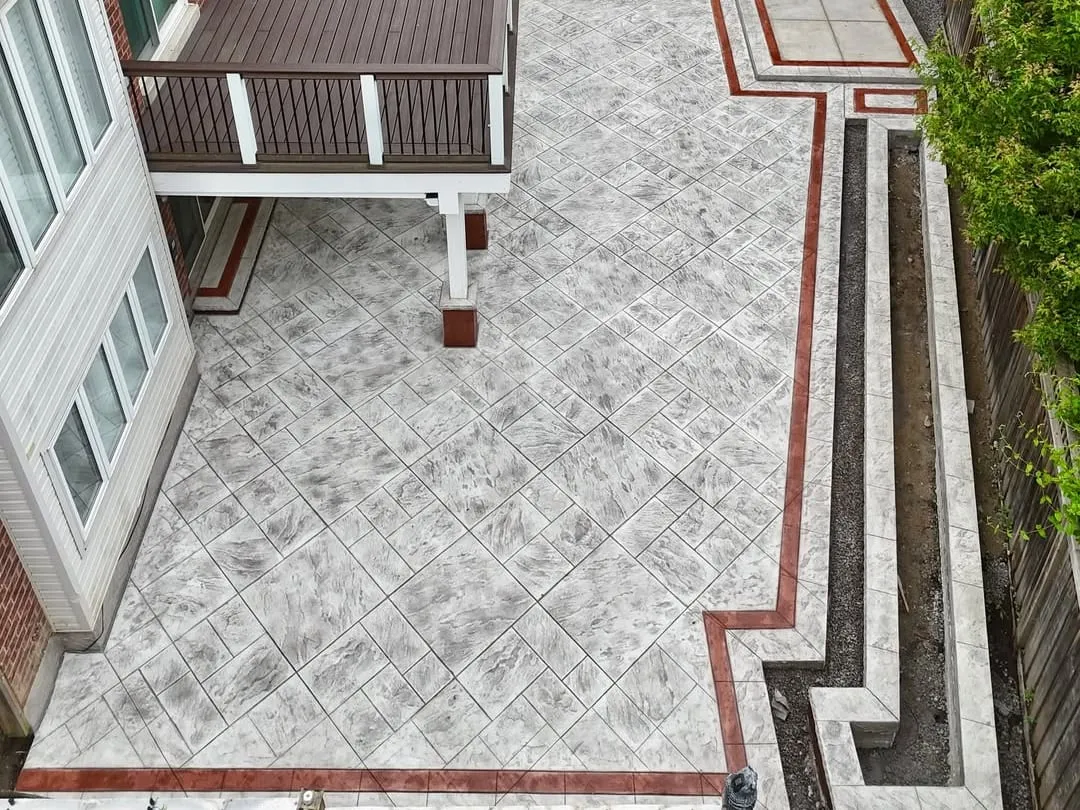
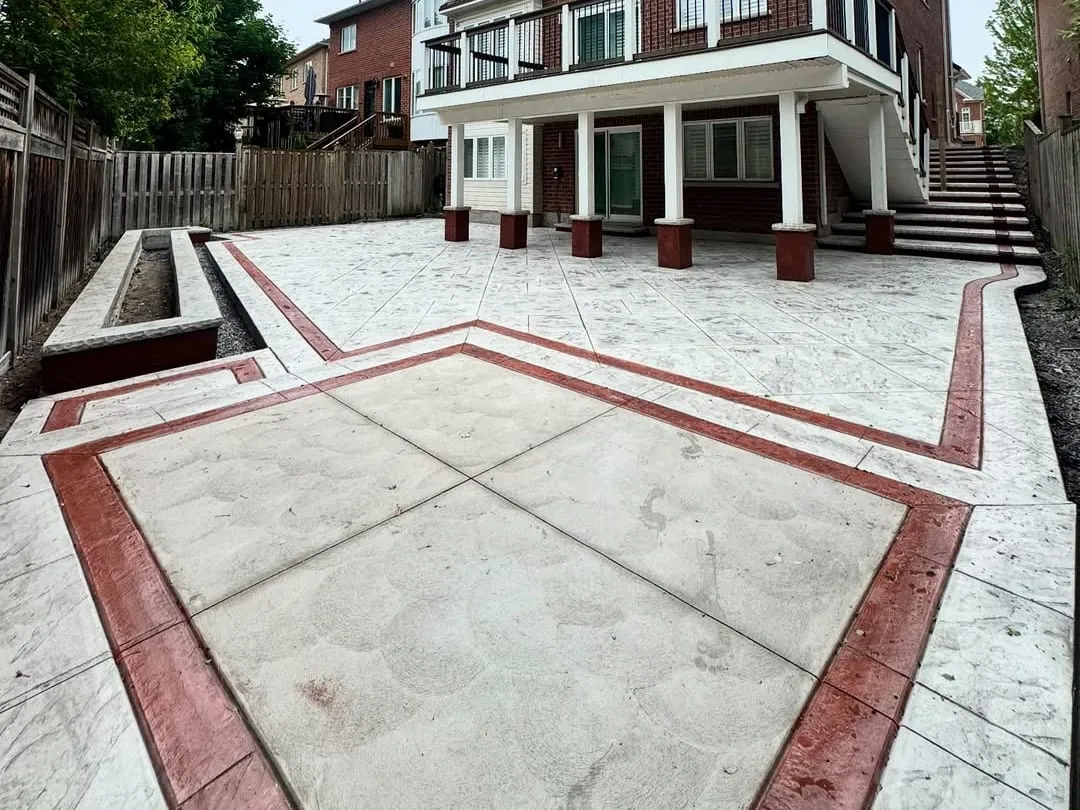
Concrete patios in Cambridge
Cambridge sits on different ground than the rest of Waterloo Region. Most of the city's aquifers are in bedrock rather than the sand-and-gravel moraine that supplies Kitchener and Waterloo, and that changes what an excavation for a new patio actually meets. Where footings or piers bear directly on rock, Ontario's foundation depth table sets no limit at all, which can mean a shallower excavation than a client might expect from a neighbouring city, though depth to bedrock still varies lot to lot and is confirmed on site rather than assumed.
Cambridge also carries the oldest and most single-detached housing stock of the four cities we build in across Waterloo Region: 22.7 percent of homes predate 1960, and 56.8 percent are single-detached houses. Formed in 1973 from the merger of the former City of Galt with the towns of Preston and Hespeler, the city's three heritage conservation districts trace directly to that history, Main Street and Dickson Hill both sit in the heart of the former Galt, and Blair Village covers the smallest of the three original settlements. Replacing a patio inside any of the three means folding heritage review into the schedule early rather than treating it as a late formality.
Cambridge is also mid-transition on zoning: its longstanding by-law 150-85 still governs some of the city while a new form-based residential by-law, 26-007, now applies to residential lots. Setback and coverage questions for a patio close to a lot line depend on which one actually applies, so we confirm that before finalizing any design that pushes close to the boundary.
None of that changes the concrete itself. A Cambridge patio gets the same 32 MPa, air-entrained mix at a 0.45 maximum water-cementitious ratio used on a driveway, since freeze-thaw cycling and chloride exposure, not vehicle load, are what actually drive the spec. At every point the new slab touches something already rigid on the property, the foundation, a walkway, a pool deck, we build in a joint that isolates the two rather than letting them move together and eventually crack apart. That by-law question does not follow you up the highway: concrete patios in Kitchener sit under one zoning by-law and four heritage districts, and backyard concrete patios in Waterloo answer mainly to the MacGregor Albert list. See our concrete driveways and concrete steps work on the same Cambridge properties, browse the patio gallery, or check everything we build across Cambridge.
On flat London clay there is no terracing to do but nothing drains by itself either, dealt with on stamped concrete patios in London.