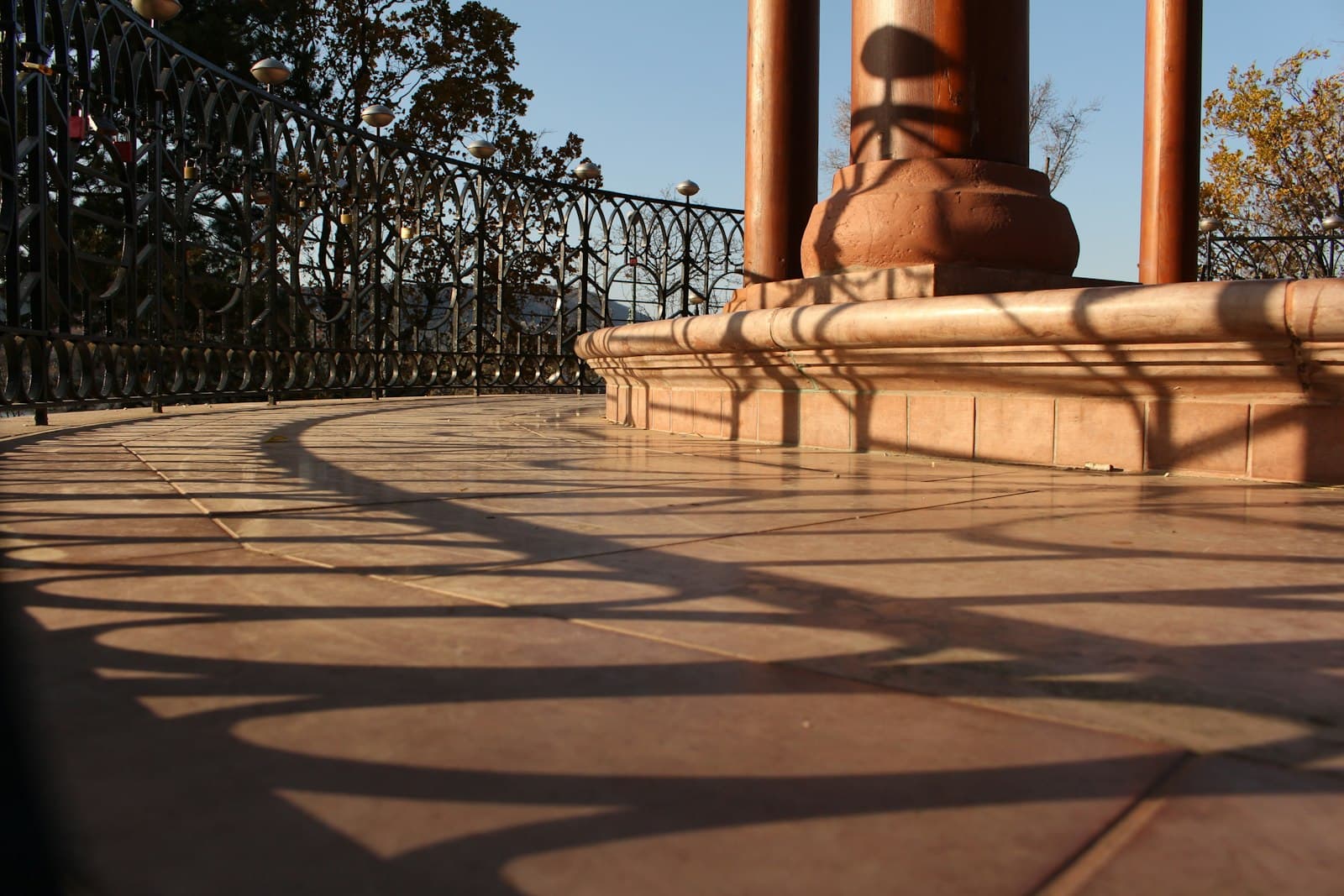
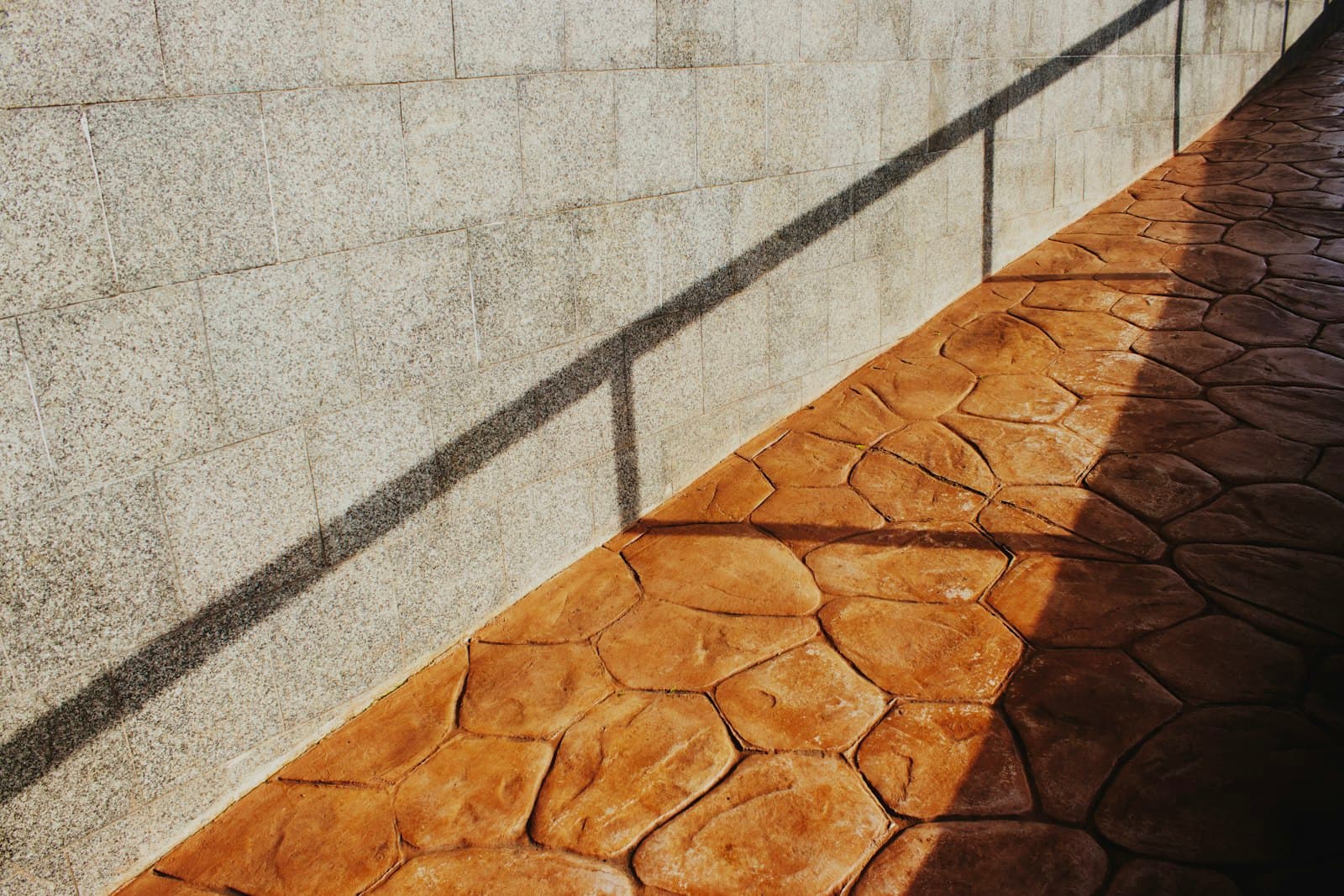
Concrete patios in Niagara-on-the-Lake
Two very different patio jobs share this town's name.
In Old Town the question is process before design. Exterior alterations inside the Queen-Picton Heritage Conservation District generally need Council's consent through a heritage permit, and By-law 4362-10 draws its exemption line around landscaping without excavation. A poured patio involves excavation, so the starting point is a conversation with the Town rather than a materials sample. Visibility matters a great deal: a screened rear terrace behind a period house is a far easier proposition than a flanking terrace on a corner lot where the street sees it, because the streetscape is the thing the district exists to protect.
The finish decision in Old Town is also part of that conversation. A broom finish or exposed aggregate sits quietly beside genuine historic masonry. Heavily patterned stamped concrete imitating flagstone tends to read as what it is, particularly against a wall that is actually two hundred years old, and it invites more scrutiny than it is worth.
Against an old foundation the construction detail matters too. The slab stays below the sill, pitched away from the house, and on a stone or rubble foundation we keep it structurally independent so it is neither loading the wall nor trapping moisture against it. Old masonry needs to breathe and dry, and a slab poured hard against it does neither any favours.
Out among the wineries and farms all of that falls away and scale takes over. These are entertaining spaces, sized for tables and gatherings rather than a couple of chairs, and the useful discipline is to lay out the actual furniture before agreeing the dimensions, because the most common regret on a large rural patio is a space that ended up almost big enough. The real constraints out here are the septic bed, which cannot be built over, and mature trees, whose major roots are not worth cutting for an extra two feet of slab.
Everything else is flatwork done properly: four inches over a compacted granular base, joints cut at the right spacing so the cracking lands where it was planned, and a deliberate answer to where the water goes.
We also pour the driveways and pool decks that get done in the same season, and cover the rest of our Niagara-on-the-Lake service area.
Down the parkway there is no heritage consent step and the patio is a straightforward residential pour, which concrete patios in Niagara Falls covers. West along the lake the yards are suburban and the question is layout rather than approvals, dealt with on stamped concrete patios in St. Catharines.
On the ridge inland the patio question is retaining rather than visibility, because sand and gravel will not hold a cut, dealt with on concrete patios in Fonthill.