Concrete driveways in Fonthill
The ground under a Fonthill driveway is unusual for Niagara, and it changes how the base is built.
Most of the peninsula is clay, which holds water and heaves. The Fonthill Kame is a glacial ridge of sand and gravel, and water drains straight through it. That removes the single biggest cause of driveway failure in this region, which is genuinely good news. What it introduces instead is a compaction question. Granular material has to be placed and compacted in lifts to reach a stable bearing surface, and if that is rushed the slab settles under load, unevenly, in the first year or two. On the Kame the base is where the driveway is won or lost, more so than in clay where drainage tends to dominate.
Grade does the rest. Fonthill sits on and around a ridge, so a good number of these approaches climb or fall, and a sloped drive gathers water along its run. That needs cross-fall to move it sideways rather than lengthwise, interception partway along on a longer run, and a discharge point chosen deliberately rather than wherever the ground happens to fall. Water arriving at a garage door is the failure everyone recognizes and nobody plans for.
Specification is the usual: four inches on a well-compacted base under passenger vehicles, and six once anything heavier than a car lives on it. Control joints cut at the correct spacing for the slab thickness and the shape of the drive put the inevitable cracking in a planned straight line rather than across the middle of the approach.
The Town of Pelham regulates the boulevard crossing and the apron even though the slab itself is not permit work, and hard surface and lot coverage limits come from the zoning by-law, which matters on the older village frontages more than on the newer subdivision lots.
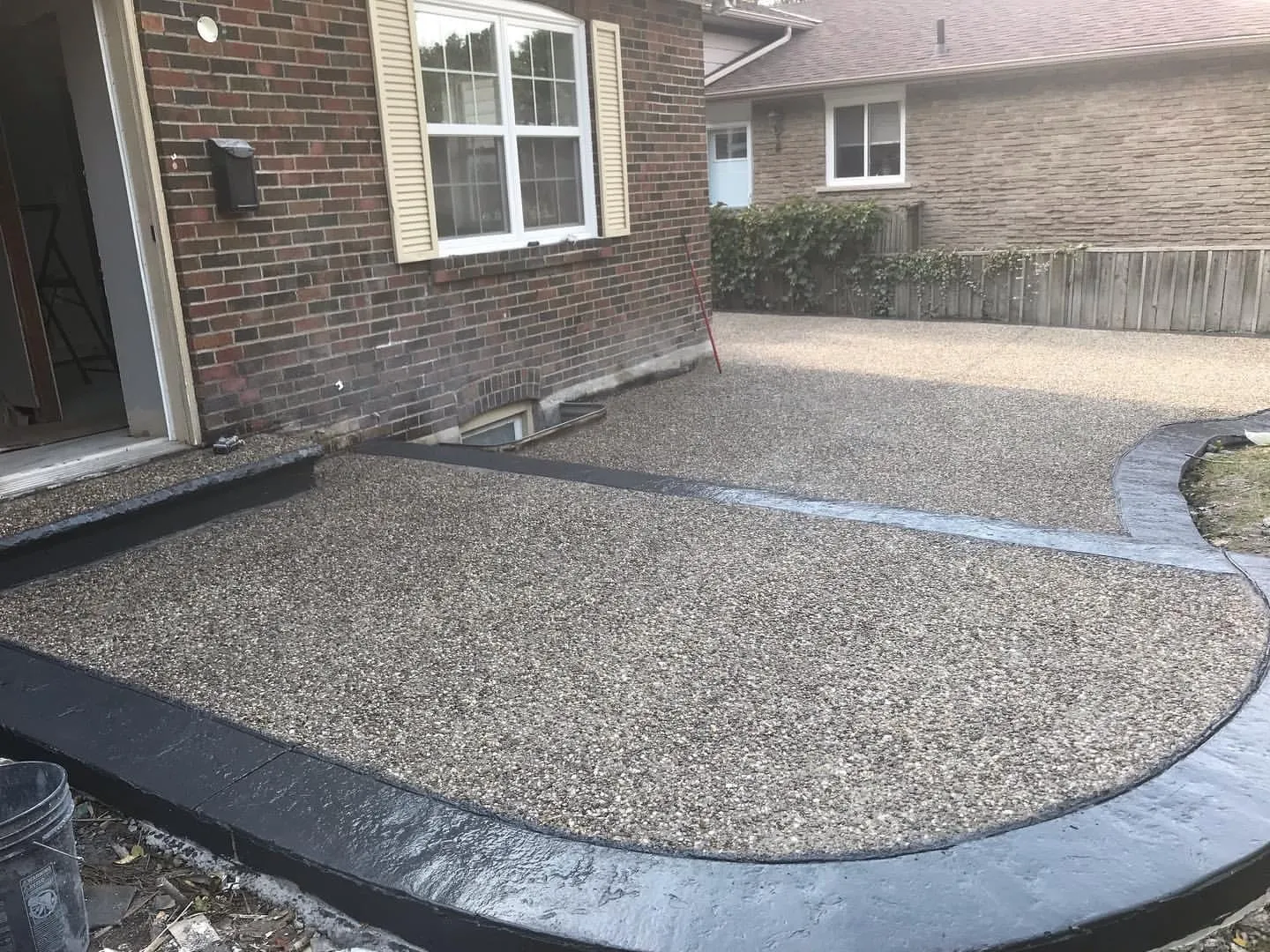
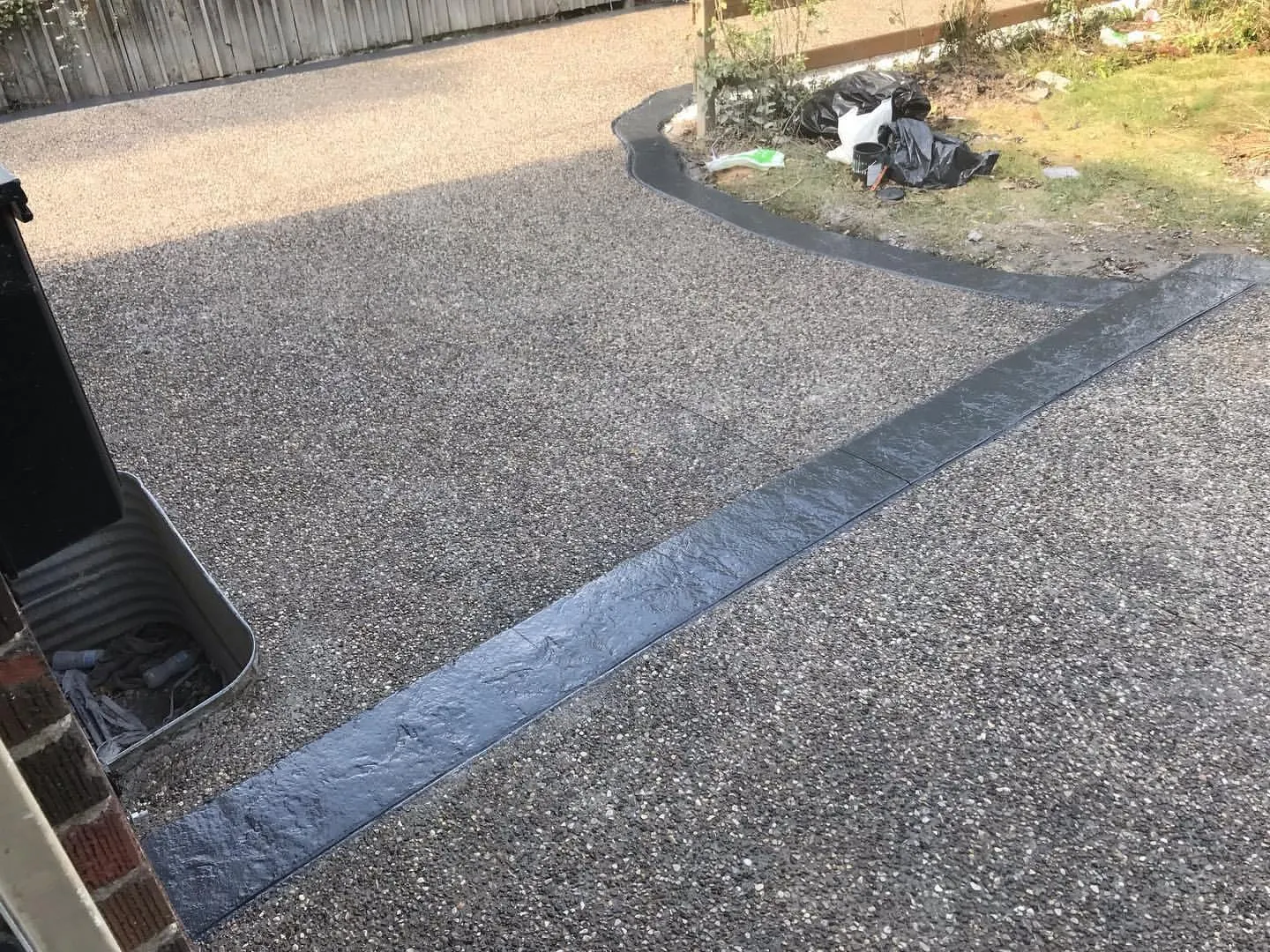
Exposed aggregate is worth considering on the ridge properties, both because it grips on a slope in winter and because it hides surface wear better than a smooth finish does.
There is a second reason the base matters here that has nothing to do with the slab. The Niagara Peninsula Conservation Authority classes the Kame as a high-importance groundwater recharge area, because more than forty per cent of the water surplus landing on it goes down into the ground rather than running off, and what it recharges feeds the cold-water creeks below the ridge. Every square foot of new hard surface takes a small piece out of that. It is not a reason to skip the driveway, but it is a reason to think about where the runoff from it is sent, and to look properly at a permeable border or a drainage strip along the edge rather than routing the whole run straight into the road. On a long approach that is a cheap decision made at the design stage and an expensive one made afterwards.
We also pour the patios and pool decks that get scheduled alongside, and cover the rest of our Fonthill service area.
East along the bench the ground returns to escarpment conditions and the approaches climb harder, covered on concrete driveways in Grimsby. North the clay comes back and with it the classic heave problem, dealt with on concrete driveway cost in St. Catharines.
