Concrete driveways in London
London gives a driveway an easy geometry and a difficult soil.
The easy part is that the city is flat. There is no escarpment approach to grade around, no moraine, no ridge. Most driveways here run more or less level from the street to the garage, which removes the cross-fall and interception design that dominates this work in the escarpment cities.
The difficult part is underneath. London sits on clay, and clay holds water. Water held under a slab through a freeze-thaw winter expands, lifts the concrete unevenly, and cracks it, and no amount of surface quality compensates. So the work that matters on a London driveway is the work nobody sees: a granular base built to a real depth, compacted in lifts, with a drainage path that actually leads somewhere. That is where the difference between a driveway that looks good at twenty years and one that looks tired at eight is decided.
Thickness follows use, four inches over that base for cars and six where a truck, an RV or a trailer parks regularly. Control joints cut at the correct spacing for the slab thickness and the shape of the drive put the inevitable cracking in a planned straight line instead of across the middle.
The regulatory notes are short but one of them catches people. The slab itself is not building permit work, while the boulevard crossing and the apron are City-regulated, and hard surface and lot coverage limits come from the zoning by-law. In Old North, Wortley Village and the other heritage conservation districts, however, a driveway is exterior work, and exterior alterations in those districts can require a heritage alteration permit. On a century street where the driveways are narrow and original, that is worth confirming before designing a widening rather than after.
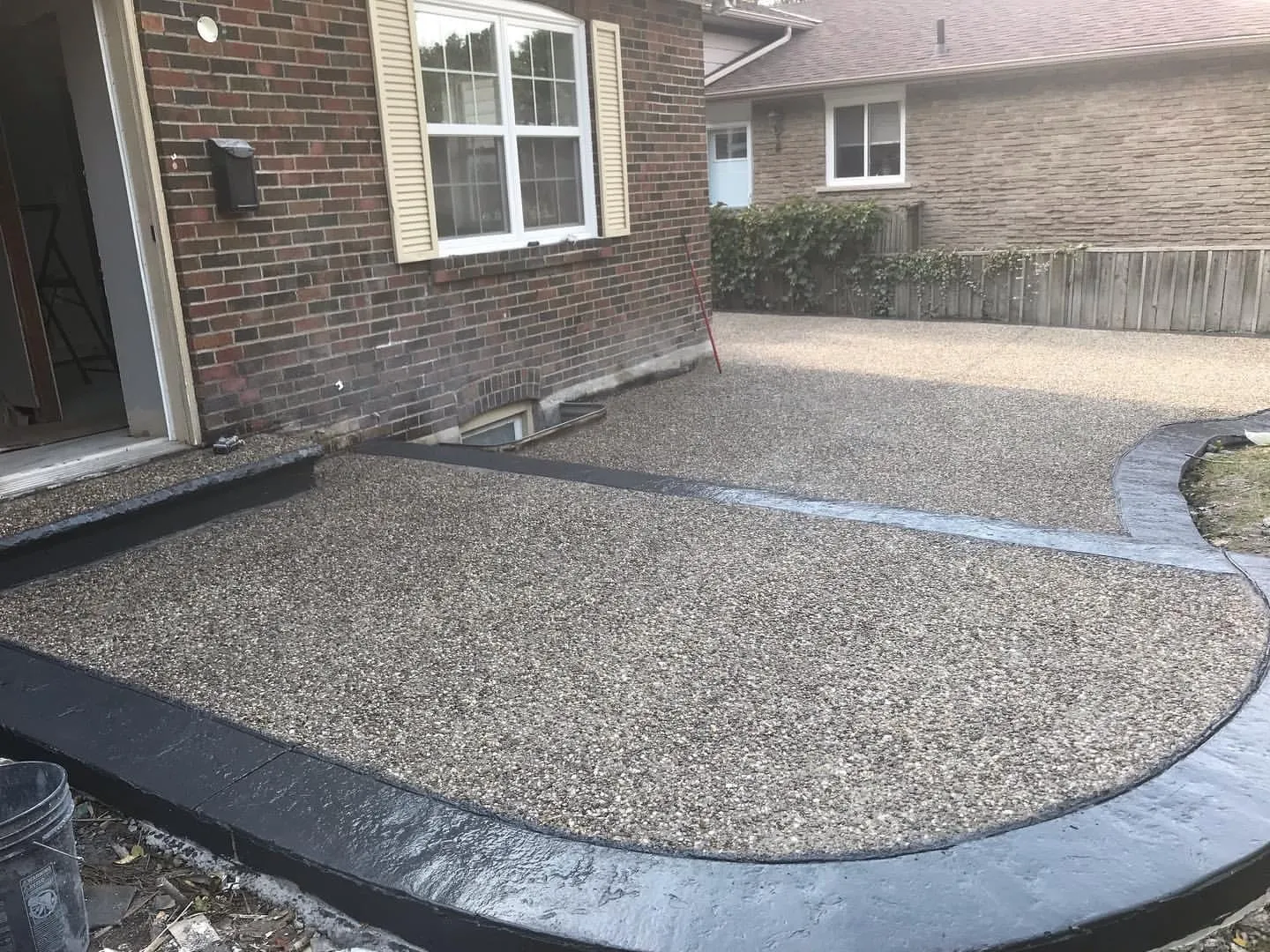
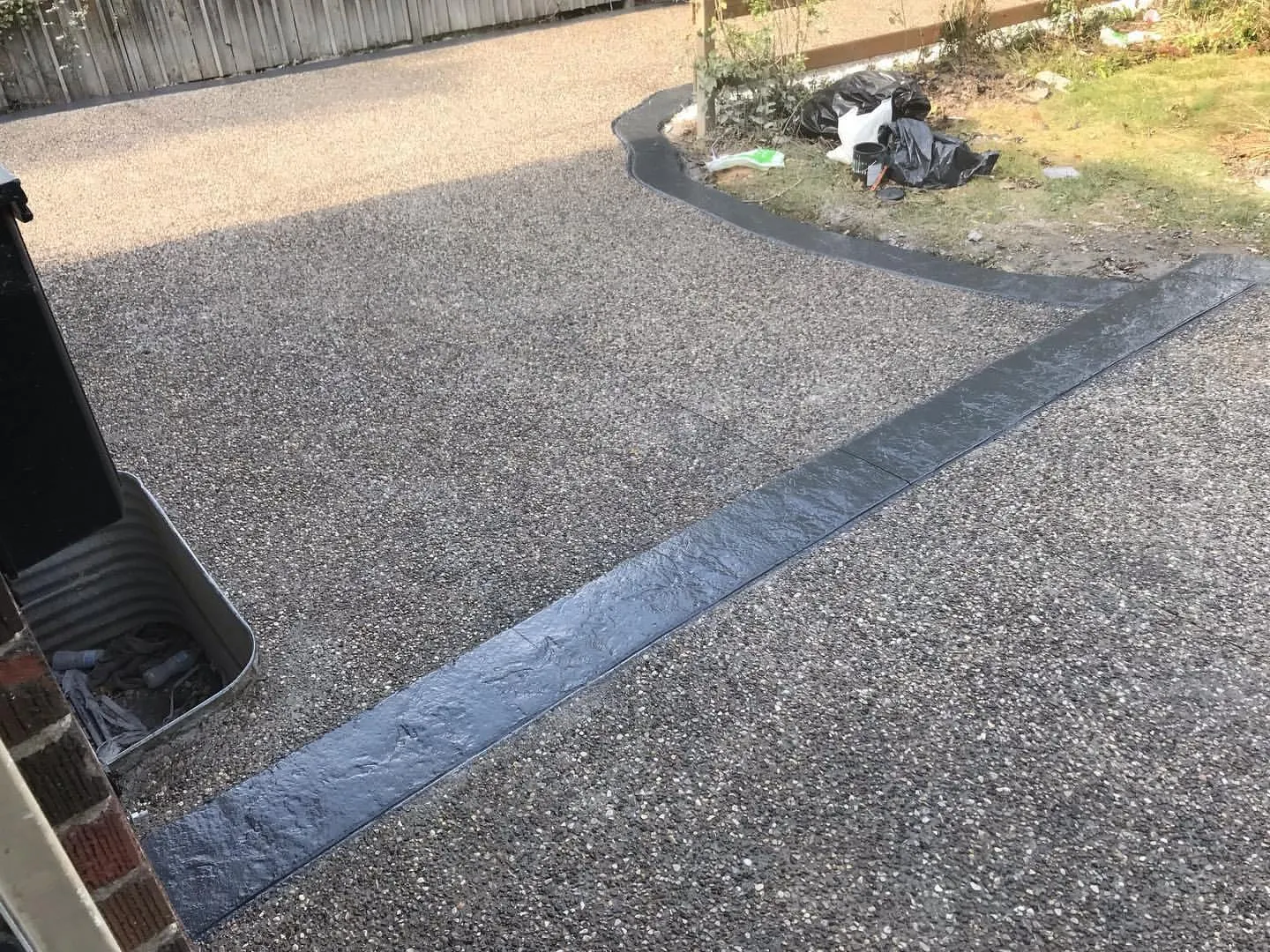
Exposed aggregate is worth considering on the older streets. It reads better against brick than a plain broom finish and hides surface wear well.
Before a replacement is booked on an older frontage it is worth checking the property's heritage status, because it changes the process rather than the concrete. London has designated heritage conservation districts under Part V of the Ontario Heritage Act, East and West Woodfield among them, and inside one an exterior alteration to a designated feature goes through a Heritage Alteration Permit. A driveway, an apron and a curb cut sit squarely in that territory on a district frontage. The city's CityMap tool shows the Register and the district boundaries, and two minutes on it at the quoting stage is the difference between a scheduled job and a stalled one.
Exposed aggregate is worth a look on a district frontage for the same reason, since it reads closer to an older surface than a broom finish does.
We also pour the patios and pool decks that get scheduled alongside, and cover the rest of our London service area.
East along the 401 the ground and the municipal apron rules change, covered on concrete driveways in Cambridge. Further east the tri-city permit process differs again, dealt with on concrete driveway cost in Kitchener.
