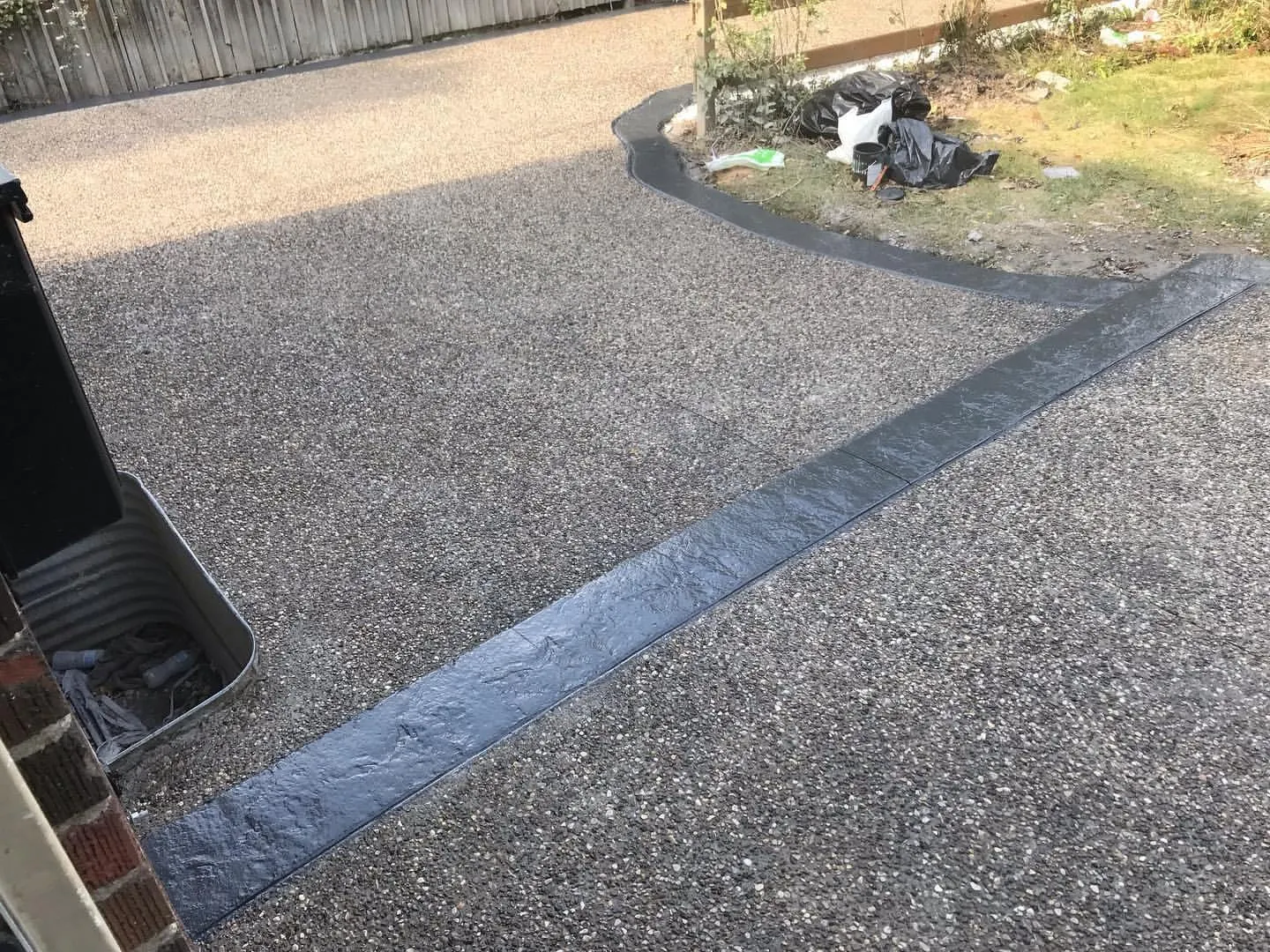
Exposed-aggregate driveway in Kitchener
The driveway serves a bungalow in Forest Heights, a Kitchener neighbourhood built mostly through the 1960s, replacing the original asphalt driveway that had reached the end of its life with alligator cracking across most of its surface. The new driveway covers roughly 640 sq ft, a double-wide apron running from the garage to the city sidewalk.
We poured a single reinforced slab with an exposed-aggregate finish, where the top layer of cement paste is washed away after the pour to reveal the natural stone aggregate underneath, giving a textured, non-slip surface with more grip through winter than a plain broom finish. The slab sits on a compacted granular base with wire mesh reinforcement and control joints cut roughly every eight feet to manage the cracking that Kitchener's freeze-thaw cycles put on any concrete slab over time.
Excavating the old driveway turned up construction debris fill under about a third of it, brick fragments and chunks of old asphalt buried well below the surface, left over from the original build in the 1960s rather than anything from the driveway itself. That fill does not compact properly and would have left soft spots under the new slab. We dug that section out further than planned and brought in additional clean granular base to replace it, which took an extra half-day of excavation and one more delivery of base material than we had budgeted for.
The new driveway matched the footprint and width of the old one exactly, so it did not require a curb-cut or driveway-widening permit from the City of Kitchener, that permit is only triggered when a driveway gets wider or the curb cut moves. Including the extra excavation day, the job ran five days from demolition to the final expose and broom-back of the aggregate, at the long end of our usual 3 to 5 day window. Final cost was $12,600, toward the upper half of our $12 to $22 per sq ft range for the exposed-aggregate finish and the added base material.
The driveway needed a week to cure before we opened it to vehicle traffic, though the sealer was applied on day five once the surface had set enough to walk on. The homeowners parked on the street for that week, which is the one real inconvenience of a driveway replacement no matter how well the schedule goes.
We also reseeded the boulevard strip disturbed by the extra excavation rather than leaving bare soil along a Kitchener street through the fall, when there is not much of a growing season left for grass to take hold on its own.