Key Takeaways
- Walk the property once the snow is gone and the ground has actually thawed, not during the melt itself. Cracks, sunken slabs and standing water that show up now are usually the winter's damage surfacing, not something new.
- Spring is when everyone calls a contractor at once. Booking in April usually means a summer start at the earliest; calling in January or February gets you first pick of the calendar.
- Permits and city-side approvals (a curb cut, a driveway entrance, an addition) take real weeks to clear, and most municipalities see application volume climb every spring. Starting that paperwork before the ground even thaws is what keeps it from being the thing that delays your start date.
- Site prep, grading, clearing what's in the way, marking where utilities run, is a homeowner task list a crew can move through in a day once it's done ahead of time, rather than a week of waiting once they're on site.
Why spring prep is its own project, separate from the pour itself
Southern Ontario runs on a short, crowded construction calendar. Everyone with a cracked driveway, a patio that heaved over the winter, or a renovation they've been planning since January wants the same few months: May through September. That means the work that actually determines whether your project starts on time isn't the pour or the framing, it's what happens in March and April, while the ground is still cold and the phone lines to every good contractor in the region are getting busy.
This isn't about picking the right week to pour concrete. That's a temperature question with a specific answer, covered in our guide to the best time of year to pour a concrete driveway, which lays out the overnight-low thresholds that actually govern a pour date. This is about everything that happens before that date is even on the calendar: reading what winter did to your property, getting yourself into a contractor's schedule while there's still room, and having the site ready so the crew isn't doing homeowner-side prep work on your dime. If you're weighing renovation timing more broadly across all four seasons, our season-by-season guide to renovating in Ontario is the wider version of this same planning problem.
Step 1: Walk the property after the ground has actually thawed
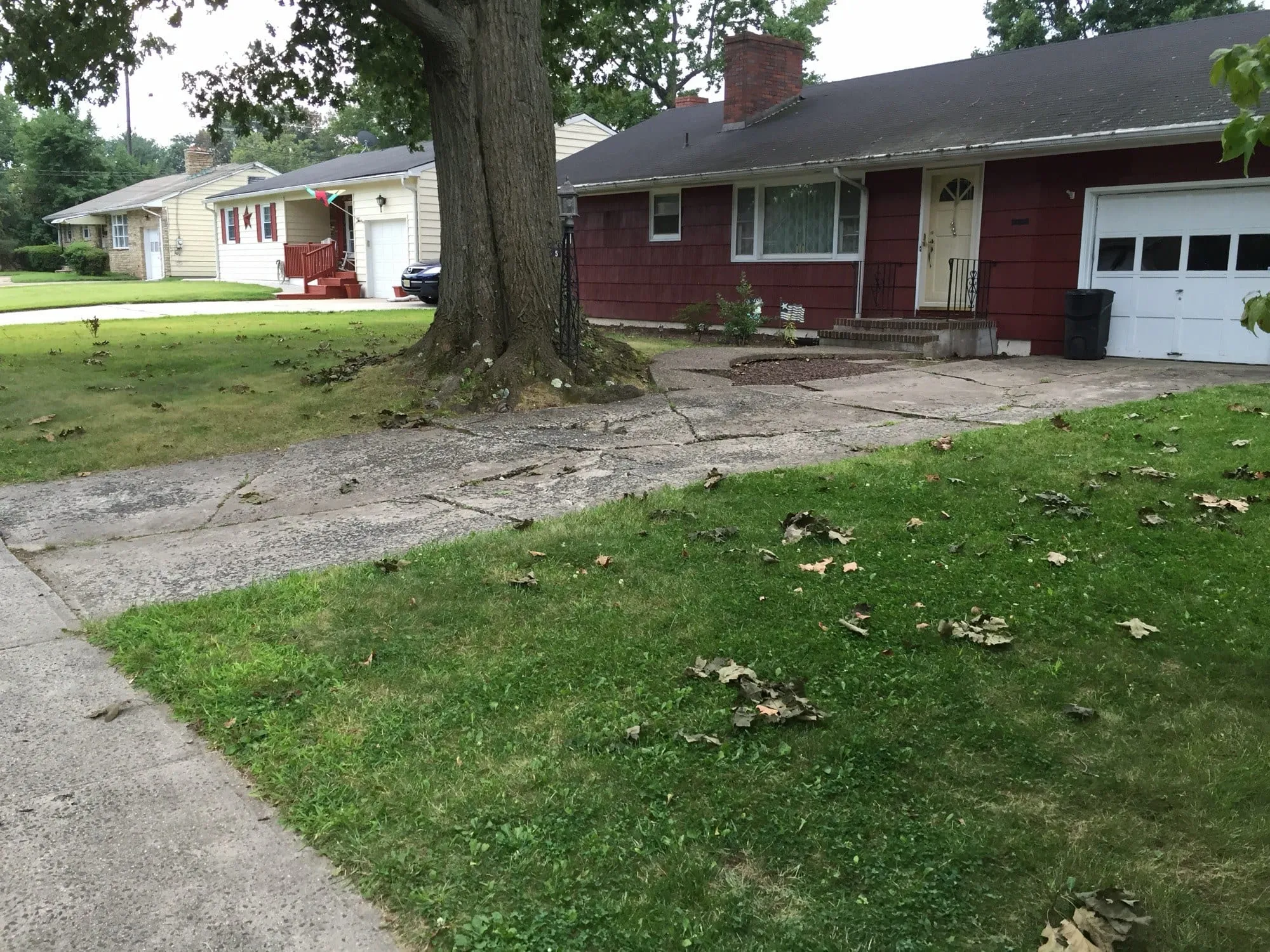
Wait for a proper thaw, not the first warm afternoon. A lot of what looks like new damage in early March is really frozen ground still holding its winter shape, and it can be a few more weeks before the same spot tells you anything useful. Once the frost is out of the ground and a rain has had a chance to run across the yard, walk the whole property and look for a specific set of things:
- Cracks that weren't there in the fall, especially ones with a visible step between the two sides rather than a hairline split. A crack you can catch a fingernail on is a different problem than one you can barely see.
- Soft or spongy spots in a driveway, walkway or patio, places where the surface gives slightly underfoot. That usually means the base underneath lost density over the winter, not that the concrete itself is failing.
- Standing water after a hard rain, sitting in the same low spot every time rather than draining away. That's a grading problem winter didn't cause, but a hard freeze-thaw winter is exactly when a marginal slope starts showing itself.
- Uneven sections, a slab or paver run where one part sits noticeably higher than its neighbour. That's the visible signature of frost heave: water in the soil beneath the slab froze, expanded, and lifted that section unevenly relative to the rest.
One distinction is worth knowing before you assume the worst: frost heave damage tends to be at its worst in the depths of winter and then partly settle back as the ground thaws, while ordinary settlement is progressive and doesn't reverse with the season. If a section that looked badly heaved in February looks closer to normal by May, that's consistent with frost movement rather than a structural problem underneath. If the sag is the same or worse, that's the one worth having someone look at before you build anything new on top of it. Our piece on how freeze-thaw actually damages concrete goes into the mechanism if you want the full picture of why a slab that looked fine in November can be cracked by April.
Step 2: Get on a contractor's calendar before everyone else does
The construction trades in this region see the same seasonal squeeze every year: demand for a start date in May, June or July is high enough that a reputable contractor's schedule fills months ahead of the season itself. Booking a project in April, once the weather has already turned and everyone else has had the same idea, often means the earliest available start is August or September rather than the early-summer date most homeowners actually want.
The fix is simply timing, not luck. Getting quotes, settling on scope and materials, and signing a contract in January or February, while the ground is still frozen and most homeowners haven't started thinking about their yard yet, is what gets you the May or June slot instead of the September one. If you're deciding what to build before you decide when, a concrete driveway in Oakville is one of the projects that fills up fastest in spring, since so many driveways in that city are coming up on replacement at the same time after a hard winter.
Step 3: Start permit paperwork before it becomes the bottleneck
Anything that touches a municipal approval, a driveway entrance permit, a curb cut, a building permit for an addition or a structural change, runs on the city's timeline, not the contractor's. That timeline gets slower, not faster, through spring: application volume climbs every year from March onward as the same seasonal rush hits every municipal building department at once, and a straightforward residential application that might clear in a couple of weeks in January can take noticeably longer once the spring backlog sets in.
That's the practical argument for filing early rather than waiting until the project is otherwise ready to start. A concrete job that needs a driveway entrance permit, like a lot of the concrete patio work in Guelph that also touches a curb or an entrance approval, is often waiting on the city's clock well after the contractor side of the schedule is already sorted. Ask your contractor early which approvals your specific project needs. Municipal permit and boulevard rules vary meaningfully by city in this region, and getting that answer in February instead of April is the difference between the permit clearing before your pour date and the permit becoming the reason the pour date moves.
Step 4: Site prep a homeowner can do before the crew arrives
A crew that shows up to a site that's already graded, cleared and marked moves faster than one that has to do that work first. Most of it doesn't need a contractor:
- Clear what's in the way. Move planters, furniture, a fire pit, anything sitting on or near the work area, and confirm fencing or gates give equipment room to get in.
- Call before you dig. Ontario One Call locates buried gas, hydro, water and telecom lines for free, and it's the step that keeps a grading or excavation job from turning into an unplanned utility repair. Request the locate a few days ahead of the scheduled start, not the morning of.
- Check the grading your own eyes can see. If last fall's walk-through showed water pooling against the house, or a downspout or sump discharge dumping right where new concrete is going in, that's worth flagging to the contractor before the site plan is finalized, not after the forms are already up. Our guide to patio grading and drainage covers what that plan actually needs to account for.
- Confirm access for the truck. A concrete pour depends on a mixer truck or pump reaching the site; a narrow side yard, an overhead line, or a shared driveway with a neighbour can all change how a crew stages the job, and it's easier to sort out in March than to discover on pour day.
Step 5: Confirm the pour window and the mix once the schedule is set
Once the calendar and the permits are in place, the last piece is matching the pour itself to the season. A crew scheduling a driveway, patio or walkway pour for late April or early May is usually planning around a cold-weather protocol, protection, monitored curing, a mix built for slower strength gain in cooler temperatures, rather than the straightforward summer pour that comes a few weeks later. What actually determines that date is covered fully in our guide to pour timing and temperature thresholds, and how a cooler spring pour affects the curing schedule itself is its own question, covered in why concrete cure time changes with the season. The short version for planning purposes: an early-spring pour is workable, but it needs more lead time before you can use the surface than the same job poured in June.
A walkway sees a different kind of spring stress than a driveway or patio does, since it carries foot traffic and de-icing salt through every cold snap right up until the ground finally clears. If a concrete walkway in Hamilton is what came out of your spring walk-through looking the worst, that combination of exposure is usually why.
Spring prep checklist
| Task | Timing | Who does it |
|---|---|---|
| Walk the property, note cracks, heaving, standing water | After a full thaw, not during the melt | Homeowner |
| Get quotes and sign a contract | January-February for a May-June start | Homeowner, with contractor |
| Confirm what permits or approvals apply | As soon as scope is set | Contractor, filed with the city |
| Clear the work area, request a utility locate | A few days to a week before the start date | Homeowner |
| Flag drainage or grading concerns | Before the site plan is finalized | Homeowner and contractor together |
| Confirm truck and equipment access | Before the crew is scheduled to arrive | Homeowner and contractor together |
Frequently asked questions
How soon should I book a contractor for a spring start?
Aim for January or February for a May or June start. Spring itself is the busiest booking season in the region, and calling once the weather has already turned usually means the available dates have moved to August or later.
Is a crack that appeared over the winter always a sign of a bigger problem?
Not always. A hairline crack with no vertical step between the two sides is common and often cosmetic. A wider crack, one with a visible edge you can catch a fingernail on, or a section that's noticeably sunk or heaved relative to the rest of the slab, is worth having a contractor look at before anything new gets built on or beside it.
Do I need a permit to replace an existing driveway or patio?
It depends on the city and on whether the work touches the boulevard, a curb, or changes drainage in a way the municipality regulates. A straight like-for-like replacement on private property is often simpler than a new driveway entrance or a curb cut, but the only way to know for a specific address is to ask before the project is scheduled, not after.
What can I do myself before the crew shows up?
Clear the work area, request a locate for buried utilities, and take a hard look at where water sits on your property after rain. All three save real time once the crew is on site, and none of them need a contractor to do.
Bottom line
Winter leaves a mark on almost every driveway, patio and walkway in this region, and spring is when that mark becomes visible and when everyone decides to do something about it at once. Reading the damage correctly, booking early, starting permit paperwork before it's urgent, and clearing the site ahead of time are what separate a project that starts on schedule from one that's still waiting for a truck in August. None of it is complicated. It just has to happen before the season everyone else is trying to book into the same few contractors at the same time.