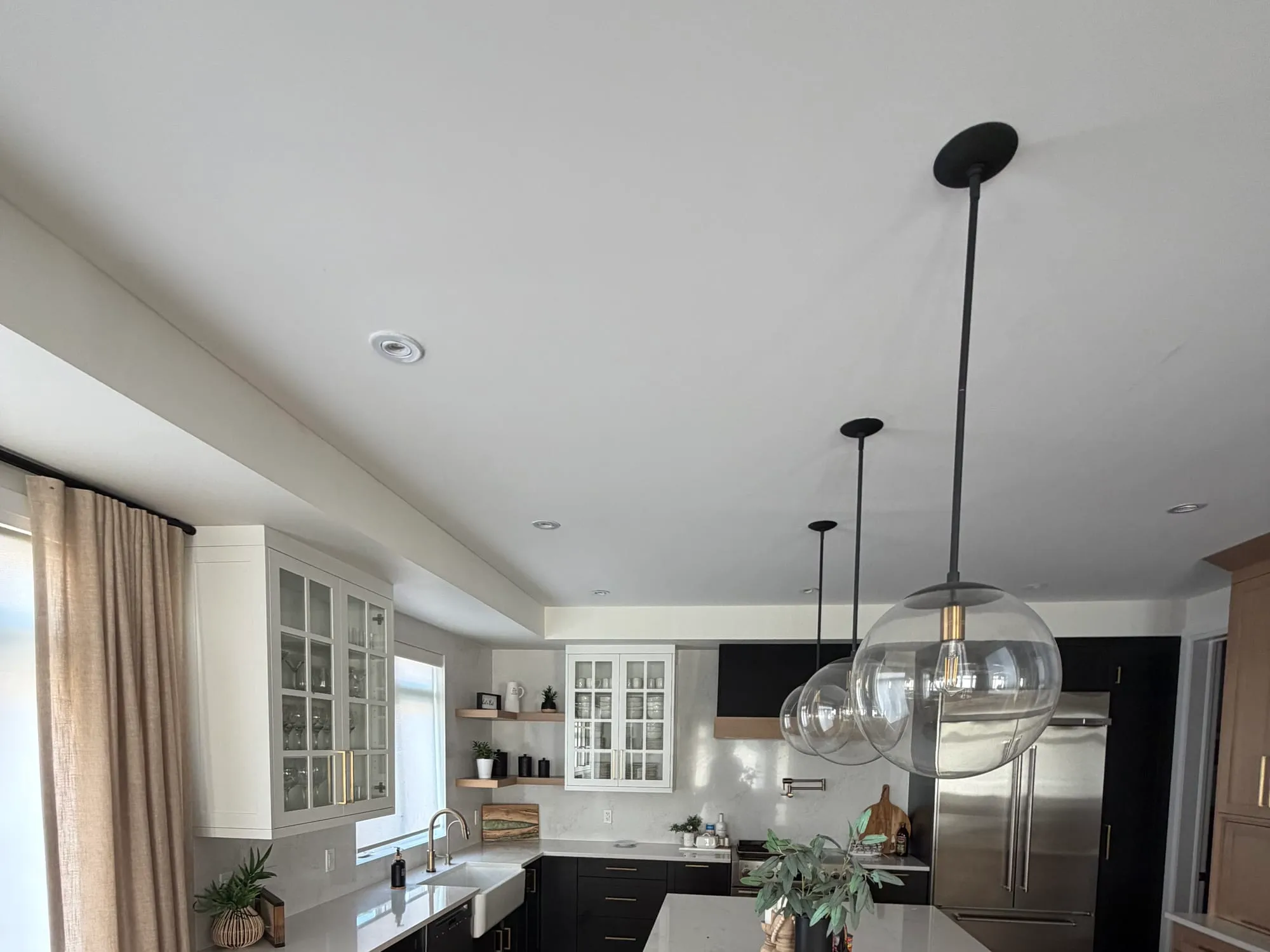
Countertop material is one of the few kitchen renovation decisions that's genuinely hard to reverse once cabinets are installed around it. Quartz, granite, and laminate cover almost every kitchen budget and every level of daily wear, but they don't fail the same way, cost the same amount, or carry the same weight with a future buyer. Here's how the three actually compare, and which one fits which kitchen.
Key Takeaways
- Granite and quartz sit close in hardness and daily durability. The real difference is maintenance: granite needs periodic sealing, quartz doesn't.
- Quartz is heat resistant, not heatproof. Manufacturers cap safe contact well below what a pot straight off the stove can reach, and heat damage generally isn't covered under warranty.
- Laminate costs a fraction of stone per square foot but scratches and burns easily, and damage usually means replacing the section rather than repairing it.
- Buyers and appraisers still read natural stone and quartz as a kitchen upgrade. Laminate reads as the builder-grade default it usually is.
How the three materials are actually built
The differences in performance start with what each material is made of, not just how it looks.
Granite is quarried stone, cut into slabs and polished. It's a natural material, so every slab has its own pattern, and no two are identical. Quartz countertops are engineered stone: roughly 90 percent ground quartz crystal bound with polymer resin and pigment, per Marble.com's breakdown of quartz versus granite composition. That manufacturing process is why quartz comes in consistent, repeatable colors and patterns, something a natural stone slab can't offer. Laminate is a printed decorative layer, usually a photograph of wood, stone, or a solid color, fused under heat and pressure to a particleboard or fibreboard core. It looks nothing like stone once you're close enough, but from a few feet away in a photo, the better laminates get surprisingly close.
That construction difference is the reason the rest of this comparison plays out the way it does. Granite's natural variation, quartz's engineered consistency, and laminate's printed surface aren't just aesthetic facts. They set the ceiling on how each one handles heat, scratches, and moisture.
Durability and scratch resistance
On paper, granite and quartz are close. Natural quartz crystal sits at roughly 7 on the Mohs hardness scale, and granite typically falls between 6 and 7 depending on its exact mineral mix, according to Marble.com's hardness comparison. In everyday kitchen use, that numerical gap barely shows up: normal cutting, sliding pots, and daily wear won't scratch either surface. Where quartz pulls ahead is consistency. Because it's engineered rather than quarried, it has no natural fissures or weak veins the way some granite slabs do, so its scratch resistance holds steady from one slab to the next.
Laminate is a different category entirely. The decorative layer scratches and dents more easily than either stone option, and once it's scratched, there's no polishing it out the way you can sometimes buff a stone surface. Small scratches can sometimes be touched up with a matching resin filler, but deep gouges or chips generally mean replacing that section of countertop rather than repairing it in place.
Cutting directly on any of the three isn't a good idea regardless of hardness rating. It's the fastest way to dull knives on stone, and the fastest way to visibly damage laminate.
Heat resistance: where quartz's reputation gets oversold
This is the comparison point homeowners misjudge most often. Granite handles direct heat from a hot pan without much concern, since it formed under genuine geological heat and pressure. Quartz has a real limit that its marketing doesn't always make obvious. The vulnerable part is the polymer resin holding the ground quartz together, and that resin can only withstand roughly 150°F before it's at risk, according to Caesarstone's own heat resistance guidance. Push it past that point and the resin can soften, discolor, or scorch, usually showing up as a dull or yellow-brown patch rather than a crack.
That damage is generally excluded from warranty coverage. Quartz manufacturers treat heat damage as avoidable homeowner misuse, not a manufacturing defect, so the fix comes out of pocket. Every quartz manufacturer's care guide says the same thing: use a trivet or hot pad, don't set a pan straight off the burner onto the surface, ever.
Laminate is the clear loser on heat. It's not heat resistant in any meaningful sense. A hot pan set directly on laminate can delaminate the surface, warp it, or leave a permanent burn mark, and none of that is repairable short of replacing the affected section.
Maintenance: the difference that compounds over years
Granite is porous enough that it needs periodic sealing to resist staining, generally every one to two years, though the right interval depends on the specific stone and how hard the kitchen gets used, per this sealing guidance from D and G Flooring. Skip it long enough and the stone can absorb oil, wine, or other liquids into the surface rather than letting them wipe off. Day to day, granite just needs regular cleaning with mild soap and water and avoiding harsh chemicals that can strip the sealant early.
Quartz needs none of that. Its resin binder makes it non-porous, so it doesn't require sealing at all, ever, for the life of the countertop. That's the single biggest maintenance advantage quartz has over granite, and it's a real factor for anyone who doesn't want a recurring task on the home maintenance calendar.
Laminate is also non-porous and doesn't need sealing, and it's genuinely the easiest of the three to wipe clean day to day. Its maintenance risk shows up at the seams and edges instead. Water that gets into a seam or under a loose edge can work its way into the particleboard core over time, causing it to swell, bubble, or delaminate. That failure mode is harder to catch early than a stain on stone, since it's happening inside the material before it becomes visible on the surface.
Cost per square foot, installed
Installed pricing spans a wide range for all three materials, driven by brand, thickness, edge profile, and local labor. As a general guide for 2026:
| Material | Installed cost per sq ft | What drives the range |
|---|---|---|
| Laminate | roughly $20 to $80 | Grade (standard vs. high-durability), finish, edge style |
| Granite | roughly $40 to $150 | Stone rarity, slab thickness, edge detail, fabrication complexity |
| Quartz | roughly $50 to $150 | Brand, color, thickness, edge profile |
Granite and quartz overlap heavily at the mid-to-premium end. On average, granite runs somewhat cheaper than a comparable quartz for a similar look, based on pricing comparisons from HomeGuide's quartz versus granite cost guide and SlabWise's 2025-2026 cost breakdown. That gap narrows or disappears at the high end, where rare stones and premium quartz colors both command a real premium. Laminate undercuts both by a wide margin at every tier, which is exactly why it remains the default in builder-grade kitchens and rental units. Get a firm quote from a fabricator rather than budgeting off any of these ranges; slab availability and edge choices move the number more than the base material does.
Resale perception
Countertop material is one of the details buyers and their agents actually notice on a walkthrough, and it carries different weight depending on which one is in the kitchen. Granite and quartz both read as an upgrade, and a kitchen remodel that includes one of them is consistently cited among the home improvements with the strongest return. This countertop resale-value writeup from Turkey Creek Stone Gallery echoes the same point. Quartz has picked up ground with buyers in recent years for its consistent look and lower maintenance, while granite still carries the appeal of being a one-of-a-kind natural material, so neither one is a clear winner over the other on a listing.
Laminate is the opposite story. It doesn't add meaningful resale value, and in a kitchen that's otherwise been updated, a laminate countertop tends to read as the one thing that wasn't finished. In a full kitchen renovation in Hamilton, that mismatch is exactly what shows up on a home inspection or a buyer's first impression: everything else upgraded, the counters still original.
Which one actually fits your kitchen
There isn't a single right answer here, but the decision logic is fairly consistent across the kitchens we work on.
Choose granite if you want a genuinely one-of-a-kind natural stone look, you don't mind resealing every year or two, and you want the best heat tolerance of the three without a second thought about hot pans.
Choose quartz if you want the lowest ongoing maintenance of the group, a more consistent and predictable pattern across the slab, and you're willing to keep a trivet within reach for anything coming straight off the stove.
Choose laminate if the budget is fixed and tight, the kitchen isn't the primary selling point of the home, or you're renovating a rental unit where stone-level durability isn't worth the premium.
Cabinet choice interacts with this decision more than people expect. A full kitchen renovation in Guelph usually prices cabinets and countertops together as one line item, so stretching the budget on one often means pulling back on the other. If you're weighing where else to spend or save, our comparison of cabinet refacing versus full replacement covers the same tradeoff on the cabinet side.
Frequently asked questions
Is quartz better than granite overall?
Neither is better in every category. Quartz needs no sealing and offers a more consistent pattern; granite handles heat better and gives a genuinely natural stone look no engineered product fully replicates. Most homeowners end up choosing based on maintenance tolerance and pattern preference rather than a clear durability winner.
Can I put a hot pan directly on quartz?
No. Quartz tolerates brief, incidental contact with warm items reasonably well, but the resin binder can only withstand roughly 150°F before it's at risk, well below what a pan straight off a burner can reach. Use a trivet every time. Heat damage is typically excluded from warranty coverage.
Does laminate ever make sense in a full kitchen renovation?
Yes, in specific cases: a tight budget, a rental property, or a secondary kitchen or wet bar that doesn't need to match the primary kitchen's finish level. In a primary kitchen intended to add resale value, granite or quartz is the more defensible choice for the countertop line item specifically.
How often does granite actually need to be resealed?
Generally every one to two years, though the right interval depends on the specific stone and how hard the kitchen gets used. A simple water-bead test tells you whether it's due: if water stops beading on the surface and starts darkening it, it's time to reseal.
Do quartz and granite really cost about the same?
Close, but granite is usually somewhat cheaper per square foot for a comparable look, though the gap narrows at the premium end where rare stones and premium quartz colors both cost more. Get quotes on both for your specific kitchen rather than assuming one is automatically cheaper.
Where countertops fit in the bigger renovation budget
Countertop material is one line item inside a much larger set of decisions, cabinets, layout, backsplash, appliances, that together determine what a kitchen renovation actually costs and returns. For how those pieces fit together, see our complete guide to kitchen renovation budgeting and planning in Ontario. If you're also deciding on the wall behind the counter, kitchen backsplash materials compared walks through that choice the same way. And if you're planning a project in Kitchener, we can walk your kitchen and tell you which countertop material actually fits your layout and budget.