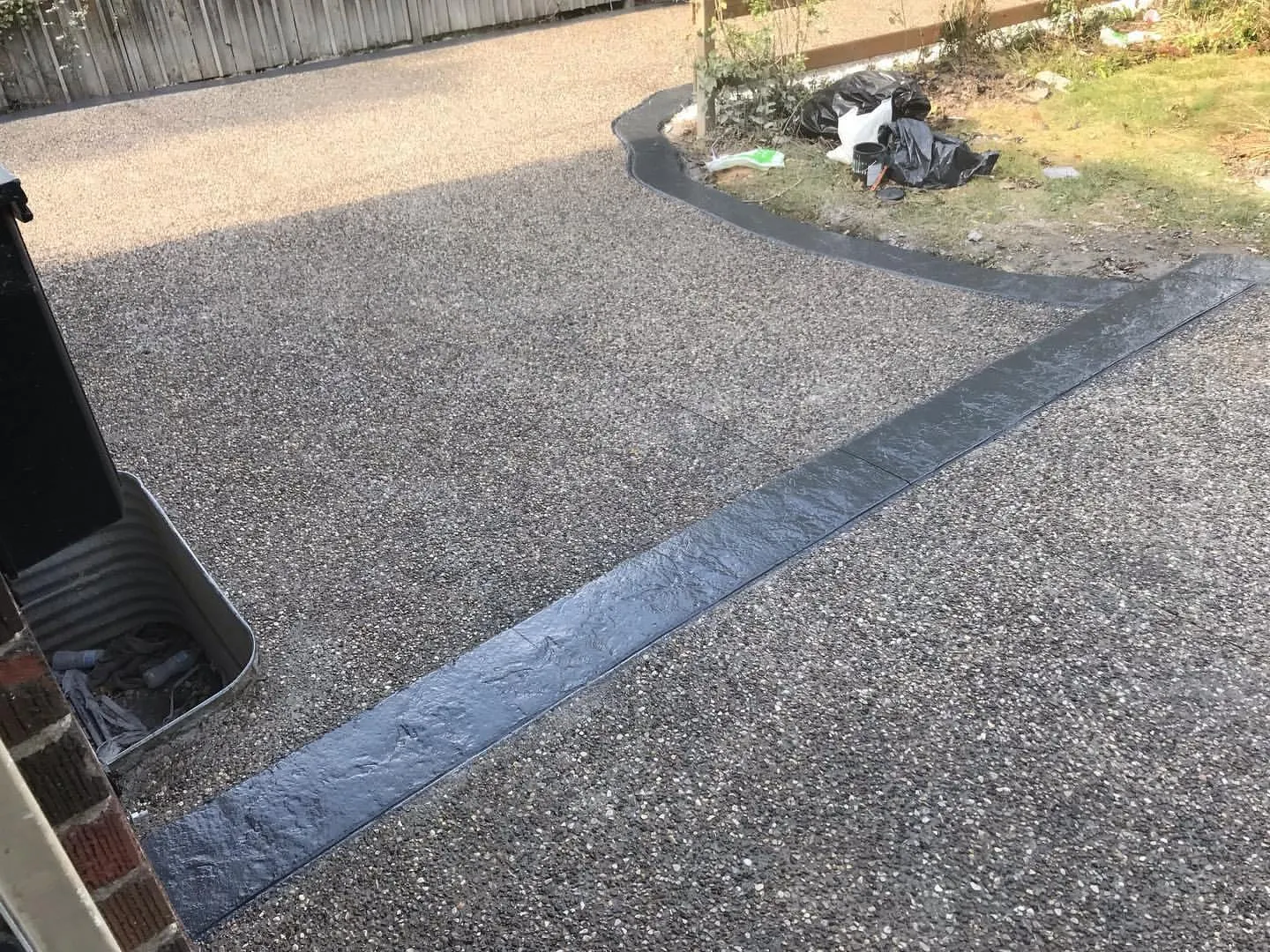
Key Takeaways
- A well-built Ontario concrete driveway typically lasts 25 to 40 years; the range comes down to the base, the mix, and freeze-thaw exposure, not the material aging out on its own.
- Air-entrained concrete meeting CSA A23.1's Class C-2 requirements resists freeze-thaw damage far longer than concrete that doesn't hit those numbers.
- Hairline cracks inside a control joint are normal aging. Diagonal cracks, heaving, or spreading scaling point to a base or freeze-thaw problem instead.
The short answer
A well-built concrete driveway in Ontario typically lasts 25 to 40 years before it needs full replacement, with plenty of properly built ones pushing past 40. That's a wide range on purpose. Concrete itself doesn't wear out the way asphalt does; what actually ends a driveway's life is almost always something that happened before or after the pour, not the material aging out on its own. Homeowners in Guelph, Hamilton, and Kitchener ask us this question constantly, and the honest answer is that the number depends far more on the base, the mix, and the winters it survives than on the calendar.
For the full picture on how a driveway gets built to hit that range in the first place, our complete guide to concrete driveways in Ontario covers base prep, mix selection, and finish options in one place. This post focuses on the one question that guide doesn't answer in depth: what actually determines how many years you get out of it.
What actually determines the lifespan
Three things decide whether a driveway lands at the low end of that range or the high end: the granular base underneath it, the concrete mix itself, and Ontario's freeze-thaw cycle acting on both for the next several decades.
The base comes first. A driveway that isn't excavated deep enough, or poured onto compacted native soil instead of a proper granular base, starts settling unevenly within a few years, and cracks follow the settlement, not the other way around. This is why the base and drainage work under a driveway matters more to its eventual lifespan than almost anything visible in the finished surface.
The mix comes second, and Ontario's climate makes it non-negotiable. Concrete used for exterior pavements exposed to freezing and de-icing salts here needs to hit Class C-2 exposure requirements under CSA A23.1, the concrete standard referenced across Ontario municipal specifications: a minimum 32 MPa strength at 28 days, a maximum 0.45 water-to-cementitious ratio, and 5-8% air entrainment. That air entrainment is the part that actually protects a driveway's lifespan. It's a network of microscopic air bubbles mixed into the concrete that gives water somewhere to expand into when it freezes inside the slab's pores, instead of cracking the surface apart from the inside. A driveway poured without proper air content, or with a mix that doesn't meet these numbers, will show freeze-thaw damage years before a code-compliant one does, regardless of how good the finish looks on day one.
How Ontario's freeze-thaw cycle actually shortens the number
Every fall-to-spring cycle in the GTA, Kitchener-Waterloo, Guelph, Hamilton, and Niagara pushes water into the concrete's surface pores through rain, snowmelt, and daily temperature swings that cross the freezing point repeatedly rather than staying reliably below it. Each freeze expands that trapped water by roughly 9%, and each cycle repeats the stress. Do that enough winters in a row on a well-built, properly air-entrained slab and the damage is negligible. Do it on a slab with insufficient air content or a weak base and the surface starts to scale, pit, and eventually crack through.
This isn't a theoretical concern. A peer-reviewed study published in The Scientific World Journal tested air-entrained concrete against plain concrete under repeated freeze-thaw cycling and found the air-entrained mix's deterioration was measurably slower, remaining durable through 300 cycles at typical residential mix strengths, while the plain mix broke down significantly faster. That gap is the difference between a driveway that's still solid at 35 years and one that needs resurfacing at 15.
What de-icing salt does to the timeline
Winter salt use is unavoidable in this region, but it isn't neutral to a driveway's concrete. Research from NIST published in Cement and Concrete Composites found that calcium chloride, a common de-icer, can react with the cement paste in concrete to form calcium oxychloride, an expansive compound that damages the concrete's internal structure at temperatures above freezing, once concentrations pass roughly 11% by mass near the surface. That's a mechanism separate from freeze-thaw cycling entirely: it's chemical, not physical, and it happens even on days that don't dip below zero. A sealed driveway with an intact penetrating sealer is far less exposed to this, since the sealer blocks the salt solution from soaking into the surface pores in the first place. An unsealed driveway that sees heavy salt use every winter is one of the more common ways a driveway loses years off its expected lifespan without an owner ever noticing until the damage is already visible.
Signs your driveway is aging normally vs. actually failing
Hairline cracks that sit inside the control joints cut into the surface are normal. Those joints exist specifically so the concrete has a planned place to crack as it shrinks slightly while curing and continues to move with seasonal temperature swings for decades afterward. A driveway with joints doing their job can look the same at year 30 as it did at year 10, aside from some surface weathering.
What's not normal: a crack that runs diagonally across a slab rather than following a joint, one edge of a crack sitting visibly higher than the other, surface scaling that exposes the aggregate in patches, or a crack that keeps widening year over year instead of staying stable. Any of those point to a base or drainage problem, or freeze-thaw and salt damage that's outpaced the concrete's ability to handle it, rather than the concrete simply reaching old age. A driveway showing that kind of damage at year 12 hasn't failed because 12 years is old for concrete; it's failed because something in the base, mix, or maintenance didn't hold up, and catching it early is usually the difference between a repair and a full replacement.
How maintenance changes the number
Sealing is the single biggest lever a homeowner controls after the pour is done. A penetrating sealer reapplied roughly every 3 to 5 years keeps water and salt out of the surface pores, which directly slows both the freeze-thaw and calcium oxychloride mechanisms described above. An unsealed driveway isn't doomed, plenty last decades without ever being sealed, but it's absorbing more of that damage every winter than a sealed one is, and it shows up as more visible wear and a shorter effective lifespan by the time you're deciding whether to repair or replace.
The other lever is what you use to melt ice. Calcium chloride and rock salt both work, but a driveway that gets heavy, repeated de-icer use every winter for 20-plus years is under more chemical stress than one where sand or a gentler product gets used more often instead. Neither choice is dramatic on its own in any single winter; the effect is cumulative over the decades the driveway is expected to last.
Frequently asked questions
Does a stamped or exposed-aggregate finish last as long as plain concrete?
The base and mix underneath determine the structural lifespan either way, since both finishes sit on the same excavation and reinforced pour. What differs is how visibly wear shows up: exposed-aggregate's texture is structural, so minor surface wear is less noticeable, while a stamped surface's pattern and colour layer sit at the surface and need more consistent resealing to still look right decades in.
Is a cracked concrete driveway automatically at the end of its life?
No. Most cracks are cosmetic and sit inside the joint pattern doing exactly what that joint was designed for. A driveway is closer to end-of-life when cracks are structural (diagonal, widening, or paired with an uneven, heaved section) or when a large share of the surface is scaling and spalling rather than just cracked in a few spots.
Does a thicker driveway last longer?
Within the standard range, yes, but only relative to the load it's built for. A 4-inch slab is the residential standard for driveways carrying passenger vehicles; if the driveway regularly sees a heavier vehicle, an RV, or repeated turning loads near a garage apron, a 5 to 6-inch section in that area extends its practical lifespan under that specific load, but pouring the whole driveway thicker than it needs to be doesn't meaningfully change how long a normally-loaded section lasts.
Can resealing actually add years to an older driveway?
Yes, meaningfully, if the concrete itself is still structurally sound. Sealing an older but undamaged driveway slows any further salt and freeze-thaw penetration going forward, which is why we usually recommend it as the first step before anyone jumps to resurfacing or replacement.
How is a driveway's lifespan different from a sidewalk or patio's?
The concrete itself is specified to the same C-2 exposure class either way, since all of them are exterior flatwork exposed to freezing and de-icing salts. What differs is loading and traffic: a driveway carries vehicle weight daily, which makes base compaction and thickness under wheel paths more consequential to its practical lifespan than it is for a patio or a walkway that only sees foot traffic.
Bottom line
Twenty-five to forty years is a realistic range for a concrete driveway built to Ontario's exposure requirements on a properly compacted base, and the number moves within that range based on decisions made at three points: how the base was built, whether the mix actually met the air-entrainment and strength numbers it needed to, and how consistently it gets sealed afterward. None of those are things you can judge from a finished surface after the fact, which is why the base and mix matter more at the quoting stage than the finish does. If you're trying to figure out whether your current driveway still has years left or is closer to the end, our concrete driveway gallery has real examples across finishes and ages, and we're glad to take a look at yours directly. If it's already showing damage, when to repair versus replace is the next thing to read, and how often to seal covers the one habit that moves the lifespan number most.