Key Takeaways
- A penetrating sealer (silane or siloxane based) is the right default for an Ontario driveway. It soaks in and repels water instead of sitting on the surface, so it doesn't peel, yellow, or get slick underfoot.
- Reseal a broom-finished or exposed-aggregate driveway roughly every 3 to 5 years. A film-forming acrylic sealer wears out faster, often within 1 to 3 years, under Ontario traffic and weather.
- Wait until new concrete has fully cured, roughly 30 days, before sealing it. Sealing too early traps moisture underneath the coating.
Why sealing a driveway isn't optional here
Concrete is porous. Water gets into those pores, and in an Ontario winter it freezes and expands dozens of times a season, a cycle that gradually breaks the surface apart from the inside. Repeated freeze-thaw cycling is what causes surface scaling, the loss of paste and mortar from the top layer of concrete, as the microcracks it creates widen with each cycle. Sealer's job is simple: keep water and de-icing salt out of the pores before that cycle gets a chance to start. Skip it, and you're relying on the concrete mix alone to survive freeze-thaw and salt, which works for a while but wears down faster than a sealed surface does.
This matters more in Waterloo, Cambridge, and Toronto than it does in a milder climate, because all three see a real freeze-thaw season on top of routine road salt tracked in from the street. A driveway that's sealed and resealed on schedule handles that combination for decades. One that isn't starts showing surface damage years earlier.
What sealer actually does
A concrete sealer works one of two ways, and the difference matters for a driveway specifically.
Penetrating sealers (silane, siloxane, or a silane-siloxane blend) soak into the concrete's pores and react there to line the inside of each pore with a water-repellent coating. The surface still looks and feels like bare concrete afterward, just less absorbent. Nothing sits on top, so there's no film to peel, no gloss to fade, and no added slipperiness when it's wet.
Film-forming sealers (acrylic, epoxy, or polyurethane) sit on top of the concrete instead of soaking in, forming a visible coating that also brings out some colour and sheen. That coating does the same water-blocking job as a penetrating sealer, but it's the thing taking the abuse from tires, snow shovels, and de-icer, not the concrete underneath, so it wears, yellows, and needs recoating on a shorter cycle.
For a driveway, a penetrating sealer is almost always the better call. It's doing the protective job that matters (keeping water and salt out) without adding a surface that can peel or get slick with ice on top of it. Film-forming sealers make more sense on a stamped patio or entryway, where colour and sheen are part of what you're paying for.
| Penetrating (silane/siloxane) | Film-forming (acrylic, epoxy) | |
|---|---|---|
| How it works | Soaks into pores, reacts inside them | Sits on top as a visible coating |
| Reseal interval | Roughly 3 to 5 years | Roughly 1 to 3 years |
| Surface appearance | Unchanged, looks like bare concrete | Adds colour, gloss, or sheen |
| Failure mode | Water repellency fades gradually | Coating peels, yellows, or flakes |
| Best use | Driveways, walkways | Patios, stamped or coloured surfaces |
How often to reseal
This is where "how often" actually depends on which sealer's already on the driveway.
Penetrating sealer: every 3 to 5 years on a broom-finished or exposed-aggregate driveway. The sealer itself doesn't wear out the way a coating does, but the water-repellent effect fades gradually as the surface picks up minor wear and the treated pores get worn back open.
Acrylic or other film-forming sealer: often 1 to 3 years, sometimes closer to the low end of that range if the driveway gets heavy vehicle traffic, direct winter sun, or frequent de-icer use. The coating itself is what degrades, and once it starts flaking there's no gradual fade, it becomes visibly patchy fairly quickly.
Watch the concrete itself rather than going strictly by the calendar. Pour a cup of water on the surface: if it beads up, the sealer's still doing its job. If it soaks in and darkens the concrete the way bare concrete does, it's time to reapply regardless of how many years it's been.
Sealing new concrete: how long to wait
Don't seal a brand-new driveway right away. Fresh concrete keeps hydrating and releasing excess mix water for weeks after the pour, and enough of that mix water needs to evaporate before a sealer can bond properly instead of getting trapped underneath it. Roughly 30 days after the pour is the standard wait, by which point the concrete has also reached most of its design strength.
If you're having a new driveway poured, ask your contractor when they plan to seal it, and don't let anyone talk you into sealing on pour day for the sake of a tidy finish.
How to seal a driveway correctly
1. Clean the surface completely. Sweep, then pressure-wash. Oil stains, dirt, and efflorescence (the white mineral haze that shows up on older concrete) all block sealer from bonding properly if they're still on the surface when you apply it.
2. Let it dry fully. Sealer applied over damp concrete traps that moisture underneath, the same problem as sealing too early after a pour. Give it a full dry day, longer if it rained recently.
3. Check the weather. Apply sealer in mild, dry conditions, ideally above 10°C with no rain forecast for at least 24 hours. Direct sun and high heat can cause the sealer to flash-dry unevenly before it's had time to soak in or level out.
4. Apply a thin, even coat. A pump sprayer or a roller both work; a roller gives more control on a driveway's scale. Two thin coats bond and cure better than one thick one, which tends to pool in low spots and cure unevenly.
5. Keep it clear while it cures. Stay off the surface with feet, vehicles, and pets for the length of time the product specifies, typically 24 to 48 hours, before returning it to normal use.
Sealing schedules differ by finish
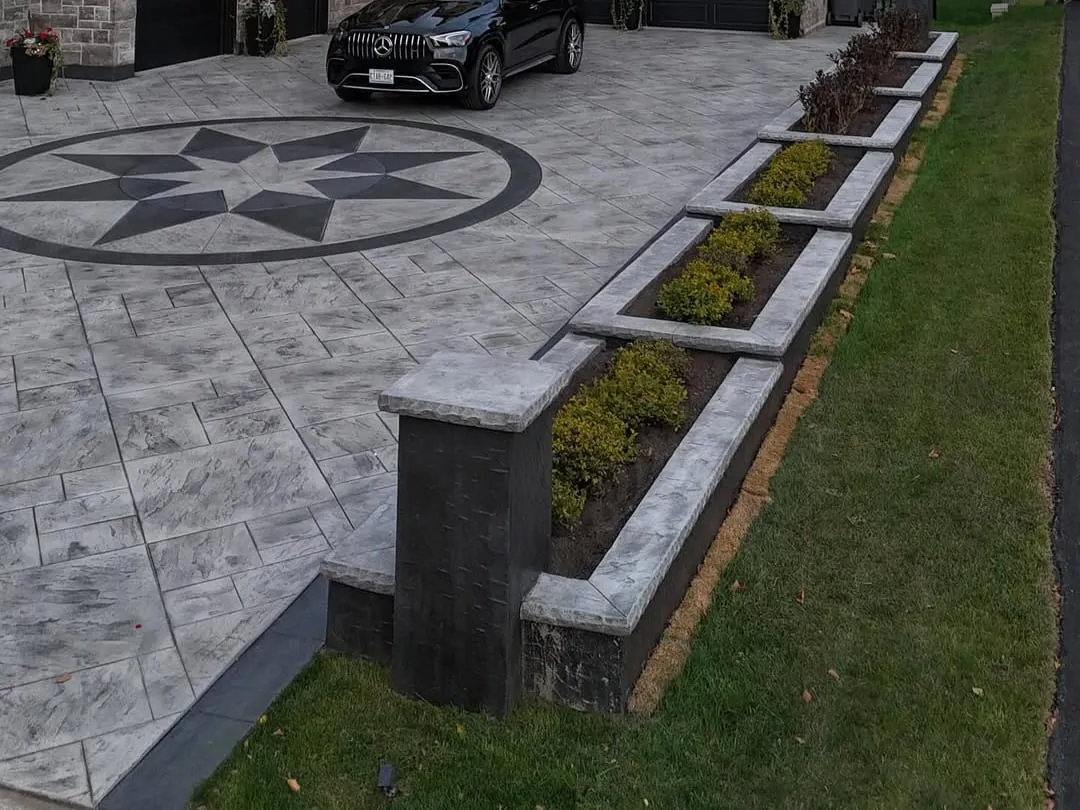
The finish already on your driveway changes some of the maintenance math above. Exposed-aggregate concrete is close to maintenance-free between sealings, since the texture holding its grip comes from the aggregate itself, not from a fresh sealer coat. Stamped concrete, by contrast, has a colour and pattern layer sitting right at the surface, which means it needs sealer reapplied on a tighter schedule to keep de-icing salt and UV exposure from fading the colour or chipping the pattern edges. If you're deciding between finishes for a new driveway, that maintenance difference is worth weighing alongside appearance, and it's covered in more depth in our complete guide to concrete driveways in Ontario.
What happens if you skip sealing
An unsealed driveway isn't doomed, but it's exposed to problems a sealed one mostly avoids. Water gets into the pores and freezes through the winter, gradually causing surface scaling and spalling, small chips and flakes lifting off the top layer of concrete. De-icing salt makes this worse: calcium chloride reacting with cement paste can form calcium oxychloride, an expansive compound that NIST research has linked to concrete damage at above-freezing temperatures once salt concentrations build up in the surface layer. A sealer's water-repellent barrier is what keeps that salt from reaching the paste in meaningful concentration in the first place.
None of this means an unsealed driveway fails in a season or two. Ontario driveways go years without sealing and still look fine. But the surface damage that does eventually show up, scaling, pitting, discoloration, almost always traces back to water and salt getting into pores that a sealer would have kept closed off.
Frequently asked questions
Can I seal a driveway myself, or does it need a professional?
Sealing itself is a reasonable DIY job for a homeowner with a pressure washer, a sprayer or roller, and a dry weekend. Where professional help earns its cost is surface prep, identifying and treating oil stains, efflorescence, or early cracking before they get sealed over and hidden rather than actually fixed.
Does sealing fix existing cracks or damage?
No. Sealer protects sound concrete from future water and salt damage, it doesn't repair cracks, spalling, or scaling that's already happened. Repair damage first, then seal, otherwise you're locking moisture into damage that's already there.
What time of year is best for sealing in Ontario?
Late spring through early fall, once overnight temperatures are reliably staying above 10°C and before the first frost risk in fall. Sealing in cold or humid conditions slows curing and increases the odds of a hazy or uneven finish.
Will sealing make my driveway slippery in winter?
A properly applied penetrating sealer shouldn't, since it soaks in rather than sitting on the surface. A glossy film-forming sealer applied too thick can add some slipperiness when wet or icy, which is one more reason penetrating sealers are the better default for a driveway rather than a patio or entryway.
Bottom line
Sealing is cheap, occasional maintenance that protects a driveway from the exact failure mode Ontario winters cause: water in the pores, freeze-thaw cycling, and salt working on top of both. Use a penetrating sealer, reseal roughly every 3 to 5 years, and don't seal new concrete before it's had about 30 days to cure. That's the whole schedule. If your driveway's overdue or you're not sure what's already on it, our gallery of concrete driveways has examples of both sealed finishes if you want a reference point before deciding what to do next.