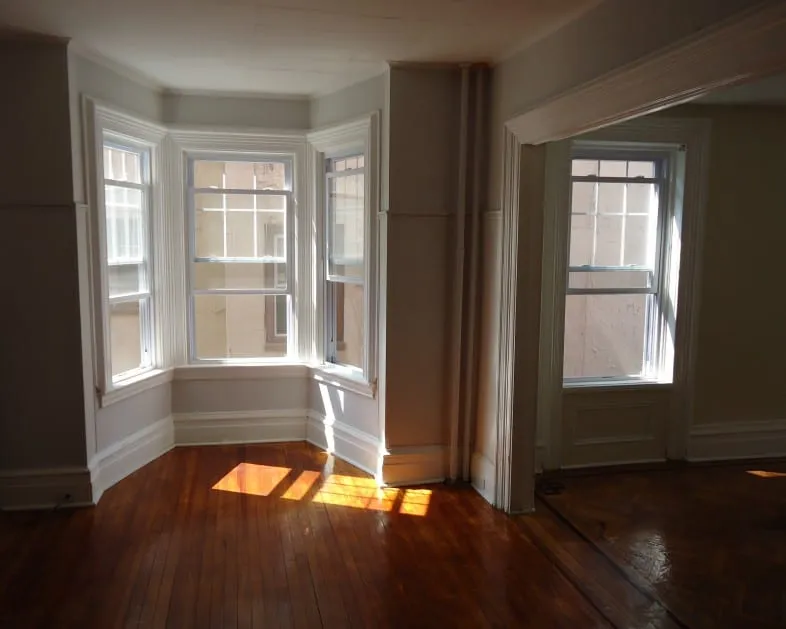
Most flooring decisions don't start with a specific product. They start with a material family: hardwood, laminate, or vinyl. Each one covers a wide range of actual products underneath it, but the three families behave differently enough on cost, water tolerance, and resale that picking the family first makes every decision after it easier. Here's how they actually compare.
Key Takeaways
- Hardwood costs the most to install, roughly $6 to $25 per square foot depending on species and finish, but a solid hardwood floor can be sanded and refinished multiple times and commonly lasts 40 to 100 years, according to industry cost and lifespan guides.
- Laminate is the cheapest of the three at roughly $3 to $14 per square foot installed, but its wood-fibre core swells and delaminates if water sits on it, and a laminate floor can't be sanded or refinished the way hardwood can.
- Vinyl (LVP and LVT) sits between the two on cost, roughly $4 to $16 per square foot, and its core is genuinely waterproof, which is why it's the default choice for a below-grade basement in a way neither hardwood nor laminate is.
- Real estate data ties hardwood to a measurable resale premium; laminate and vinyl don't carry the same weight with buyers, though a quality vinyl floor reads far better today than the vinyl of a decade ago.
- The three don't have to compete for the same room. A lot of Ontario homes run hardwood on the main floor, vinyl in the basement and bathrooms, and laminate wherever the budget needs to stretch furthest.
Quick comparison
| Hardwood | Laminate | Vinyl (LVP/LVT) | |
|---|---|---|---|
| Installed cost | Roughly $6-$25/sq ft | Roughly $3-$14/sq ft | Roughly $4-$16/sq ft |
| Typical lifespan | 40-100 years (refinishable) | 15-25 years, up to 30 with care | 15-25 years |
| Water tolerance | Poor to fair; solid hardwood cups with moisture | Poor; core swells if water sits on a seam | Waterproof core; the strongest of the three below grade |
| Repairable? | Yes, sanded and refinished multiple times | No, damaged planks are replaced, not refinished | No, damaged planks are replaced, not refinished |
| Resale read | Consistently tied to a measurable premium | Reads as the budget option | Improving, but still short of hardwood's premium |
| Best fit | Main-floor living space in a home built to hold value | ||
| Rental units, tight budgets, secondary rooms | |||
| Basements, bathrooms, kitchens, high-moisture rooms |
What each material family actually is
The three families aren't variations on the same product. They're built from different things, and that's the root of every difference that follows.
Hardwood is either solid wood milled into planks or engineered hardwood, a thin layer of real wood bonded to a plywood-style core for stability. Both are genuine wood floors that just handle moisture and refinishing differently, a distinction detailed enough to earn its own post: see our guide to what actually differs between engineered and solid hardwood. For this comparison, hardwood as a category means a real, sandable wood surface, and the most expensive of the three families to install.
Laminate is a printed image of wood (or occasionally stone) fused under heat and pressure to a high-density or medium-density fibreboard core, with a clear wear layer on top. Nothing about it is real wood or stone; it's a photograph bonded to compressed wood fibre, and that core is laminate's single biggest weakness throughout the rest of this comparison.
Vinyl, whether it's luxury vinyl plank (LVP) or luxury vinyl tile (LVT), is a fully synthetic product built around a PVC or WPC/SPC core with a printed decorative layer and a protective wear layer on top. Because the core is plastic rather than wood fibre, it doesn't absorb water the way laminate's core does, which is vinyl's single biggest structural advantage over the other two.
Cost per square foot: what you actually pay
Installed pricing spans a wide range for all three, driven by product grade, subfloor condition, and room complexity, but the order between the three families holds up consistently across cost guides.
Hardwood runs the widest and highest range. Angi puts hardwood installation nationally at roughly $6 to $12 per square foot for typical solid and engineered products, climbing to $13 to $25 for premium species and wider-plank or herringbone layouts (Angi). Our own current pricing sits inside that range too; anyone comparing quotes for hardwood flooring cost in Toronto will find solid and premium engineered hardwood, with full subfloor prep, running $9 to $17 per square foot installed once Ontario labour rates are factored in.
Laminate is the cheapest of the three. Cost guides put installed laminate at roughly $3 to $14 per square foot, materials running $1 to $6 and labour adding $3 to $8 on top (HomeGuide). Someone budgeting a laminate flooring installation in Waterloo often ends up comparing it against hardwood purely on this gap, since laminate's low end can run less than half of hardwood's.
Vinyl lands in the middle. LVP and LVT installed pricing generally runs $4 to $16 per square foot, premium waterproof lines toward the top and budget sheet vinyl well below it (Today's Homeowner). Someone pricing flooring installation in Cambridge for a basement job usually finds vinyl closer to laminate than to hardwood, part of why it's become the default basement material.
Verdict: laminate wins on upfront cost, hardwood is the clear premium, vinyl splits the difference. None of these ranges account for subfloor repair, removal of the old floor, or stairs and transitions, all of which move the real number more than the base material choice does. Our own breakdown of flooring cost per square foot walks through what actually drives a quote beyond the material line item.
How long each one actually lasts
"Cheapest to install" and "cheapest over 20 years" aren't the same floor, and this is where that gap shows up.
Hardwood has the longest realistic lifespan of the three, by a wide margin. Solid hardwood commonly lasts 40 to 100 years, and homes with original strip hardwood from the early 1900s regularly still have it, refinished a handful of times along the way. Standard 3/4-inch solid planks can typically be sanded and refinished four to six times before the tongue and groove is at risk, which is the mechanism behind that long lifespan: the floor doesn't wear out, its finish does, and the finish gets replaced. Engineered hardwood's lifespan depends heavily on veneer thickness, generally landing in the 20-to-40-year range for most residential product, a distinction our engineered versus solid hardwood comparison covers in depth.
Laminate typically lasts 15 to 25 years, with higher-grade AC-rated products pushing toward 30 years under light residential use. The North American Laminate Flooring Association's own wear-resistance standard tests the decorative layer against thousands of abrasion cycles, which is where AC ratings come from, but that number describes surface wear resistance, not water tolerance or overall lifespan.
Vinyl sits close to laminate on paper, generally 15 to 25 years, with entry-level sheet and click-vinyl at the shorter end and thicker-wear-layer LVP and LVT pushing past 20 years in lower-traffic rooms. Neither laminate nor vinyl can be sanded and refinished; once the wear layer is damaged through, the fix is replacing the plank, not restoring the surface.
Verdict: hardwood is the only one of the three built to outlast a single ownership span, provided the finish gets refinished before it fails completely. Laminate and vinyl are both closer to a fifteen-to-twenty-five-year replacement cycle, which is a real and reasonable choice for a lot of rooms, just not the same kind of investment as hardwood.
Water and moisture tolerance: the biggest structural difference
This is the one axis that actually separates these three families, rather than just ranking them.
Hardwood is the most vulnerable to moisture of the three, full stop. Solid hardwood expands and cups when it absorbs ambient moisture, and a basement slab without a proper vapour barrier keeps releasing ground moisture regardless of the house's age, which is why solid hardwood is a poor below-grade choice almost everywhere in Ontario. Engineered hardwood's layered core resists that movement somewhat better, but "somewhat better" still isn't waterproof.
Laminate looks tougher than it is. Even laminate marketed as "waterproof" has a wood-fibre core that swells, warps, or delaminates once water actually reaches it, most commonly through an unsealed seam between planks. Water damage on laminate can show up within hours, and once a plank has swollen there's no drying it back to shape; the section gets replaced.
Vinyl is the one genuinely waterproof product of the three. LVP and LVT are built around a PVC or WPC/SPC core that doesn't absorb water the way wood fibre does, which is why vinyl is the standard recommendation for basements, bathrooms, and kitchens. That said, a waterproof core doesn't mean a waterproof room: water that sits long enough can still find its way under the flooring at a seam, and a real flood is a different problem than everyday spills. Our guide to the best flooring for a damp or below-grade basement covers why the material is only half of what keeps a basement floor dry.
Verdict: for anything below grade or exposed to regular moisture, vinyl wins outright; hardwood is the material to avoid there entirely.
Maintenance, repair, and what happens when something goes wrong
Hardwood asks the most of a homeowner in small, recurring ways, but recovers the best from real damage. A recoat or refinish every several years keeps the finish protected, and a deep scratch or worn patch can be sanded out rather than replaced.
Laminate is low-maintenance day to day but unforgiving when damaged. Regular sweeping and occasional damp mopping is all it needs, but a burn, a gouge, or water damage generally means pulling and replacing the affected plank, and matching an older run that's since been discontinued isn't always possible.
Vinyl is the easiest to live with day to day and reasonably repairable at the plank level, since individual LVP planks in a click-lock system can often be pulled and swapped without disturbing the rest of the floor. Neither vinyl nor laminate tolerates being refinished; once the surface layer is gone, it's gone.
Pets change this calculus, since claw traffic and accidents affect each of these three differently; our guide to pet-friendly flooring options that hold up breaks that down material by material.
Resale perception
Buyers and their agents don't weigh these three the same way, and the data backs that up more clearly for hardwood than for the other two.
The National Association of Realtors' 2022 Remodeling Impact Report found that installing new wood flooring recovers an estimated 118 percent of its cost at resale, and refinishing existing hardwood performs even better, at an estimated 147 percent (NAR). The National Wood Flooring Association cites a real estate agent survey finding that identical homes with wood floors can sell for up to 10 percent more than homes without them (NWFA). Neither laminate nor vinyl has comparable survey data behind it, which is itself informative: hardwood is the one family here that shows up consistently in resale-value research.
That doesn't mean the other two carry no weight. A quality vinyl plank floor with a realistic wood-look finish reads as a legitimate update, especially replacing worn carpet or dated tile, and it's shed a lot of the "cheap vinyl" stigma of a decade ago. Laminate is the one buyers and inspectors are most likely to flag as the budget choice in a primary living space.
Which one actually fits your home
Choose hardwood for the main living areas of a home you're planning to stay in long-term or one priced to compete on finishes at resale, where the higher upfront cost is offset by decades of use and a real refinishing option down the line.
Choose vinyl for basements, bathrooms, kitchens, mudrooms, or anywhere water is a real possibility, since it's the only one of the three genuinely built to tolerate it, and it's improved enough on looks that it no longer reads as an obvious downgrade in a main living space.
Choose laminate when the budget is the deciding factor and the room isn't exposed to real moisture risk, such as a secondary bedroom, a rental unit, or a basement rec room where a vapour barrier and proper subfloor prep are already handling the moisture question separately.
Mixing materials by room is the norm, not the exception. A lot of the homes we work on run hardwood through the main floor, vinyl in the basement and any bathroom, and laminate in a secondary bedroom or two, matching each material to what that specific room actually demands rather than picking one floor for the whole house.
Frequently asked questions
Is vinyl or laminate better for a kitchen?
Vinyl, in almost every case. A kitchen sees regular water exposure from sink splashes, dishwasher leaks, and dropped ice, and vinyl's waterproof core tolerates that in a way laminate's wood-fibre core doesn't.
Does engineered hardwood solve hardwood's moisture problem?
Partly. Its layered construction resists expansion and contraction better than solid hardwood, which is why it's the more common recommendation over a slab. It still isn't waterproof, though, and isn't the right call for a room with standing water. Our deeper comparison of engineered versus solid hardwood covers exactly where that line sits.
Can laminate or vinyl be refinished like hardwood?
No, and this is one of the more important differences between the categories. Hardwood's wear layer is the wood itself, so sanding removes damage and exposes fresh wood underneath. Laminate and vinyl both have a thin printed decorative layer under a wear coating; once that's damaged through, there's no wood underneath to sand into, so the plank or tile gets replaced instead.
Is it worth paying more for hardwood if I'm not staying in the home long?
Usually not, on a pure cost basis. Hardwood's resale premium is most reliably captured over a longer hold, and a homeowner selling within a few years is less likely to recover a full hardwood upgrade than one who lives with the floor for a decade or more. Vinyl's lower upfront cost often makes more sense on a shorter timeline.
Where flooring fits in the bigger renovation
Flooring is rarely the only decision in a renovation, and it interacts with paint, trim, and lighting choices more than it first appears. Our complete guide to flooring and interior painting for Ontario homes walks through how those pieces fit together as one project rather than a string of separate ones. If you're planning a flooring project in Waterloo, Cambridge, Toronto, or anywhere else across the region we build in, we can walk your space and tell you which material actually fits the room, the budget, and how long you're planning to stay.