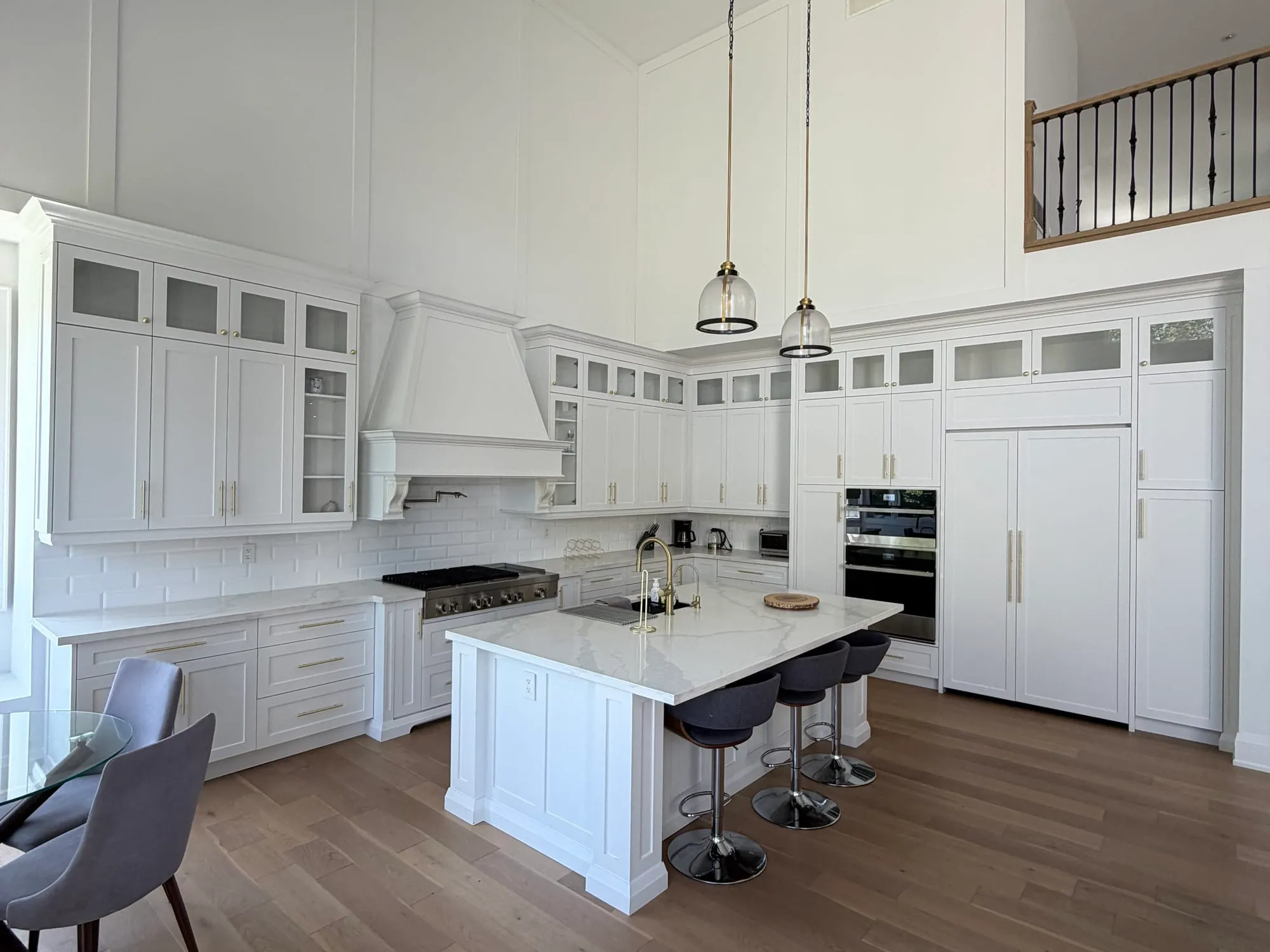
A full kitchen renovation in Ontario usually lands somewhere between the mid five figures and well into six, depending on layout changes, cabinetry, and finishes. Most homeowners aren't paying that out of a chequing account. They're borrowing some or all of it. The option they pick changes both the interest cost and how the debt shows up against their mortgage down the line. This isn't individualized financial advice. Every lender sets its own rates and qualification rules, and a mortgage broker or your own bank can tell you what you specifically qualify for. What follows is a plain rundown of what's actually on the table in Ontario right now, and how those options tend to compare.
Key Takeaways
- A home equity line of credit (HELOC) is usually the cheapest way to borrow against a paid-down mortgage, since it's secured by your home. The rate is variable, though, and it puts your house behind the debt.
- A cash-out refinance rolls the renovation cost into your mortgage itself, capped at 80% loan-to-value in Canada. It can trigger a real penalty if it breaks an existing fixed-rate term early.
- Personal loans and contractor point-of-sale financing, like Financeit, which most GTA renovation contractors already use, are faster to get and don't touch your home title. They cost more in interest unless you land a 0% promotional plan.
- Credit cards make sense for a deposit or a small overrun, not for financing the renovation itself. Canada's average card rate sits north of 20%.
What actually decides how a renovation gets paid for
Before comparing products, it helps to know what a lender is actually looking at. Four things drive both what you qualify for and what rate you're offered: home equity, credit score, income relative to existing debt, and how much you're trying to borrow. A homeowner with 30% equity and a strong credit score has access to nearly every option below, at a competitive rate. Someone with little equity built up or a thin credit file is generally pushed toward unsecured options: personal loans, contractor financing, or credit. Those options cost more precisely because the lender has less to fall back on if payments stop.
Project size matters too. A $15,000 kitchen refresh and a $90,000 full gut renovation aren't financed the same way in practice, even where the same products are technically available for both. Smaller jobs are where a personal loan or a 0% contractor plan tends to make sense. Larger ones are where the interest-rate gap between a HELOC and a personal loan adds up to real money. It's worth doing the math before signing anything.
At a glance, here's how the options compare:
| Option | Typical rate range | Secured against your home? | Speed to arrange |
|---|---|---|---|
| HELOC | Roughly mid-4% to mid-5% (prime + 0% to 1%) | Yes | Slower, requires appraisal and equity room |
| Cash-out refinance | Often near or below HELOC rates, fixed | Yes | Slowest, replaces the whole mortgage |
| Personal loan | Roughly 5% to 20% | No | Fast, no appraisal |
| Contractor financing (e.g. Financeit) | 0% promotional, or a standard APR comparable to a personal loan | No | Fastest, prequalify in minutes |
| Credit card | Roughly 20% to 24% | No | Instant |
Home equity line of credit (HELOC)
A HELOC is a revolving line of credit secured against your home. For a homeowner with meaningful equity, it's usually the lowest-cost way to fund a renovation. As of August 2026, the Canadian prime rate sits at roughly 4.45%. HELOC rates are typically priced at prime plus 0% to prime plus 1%. That puts most offers somewhere in the mid-4% to mid-5% range, according to WOWA's HELOC rate tracker. It's a line of credit rather than a lump-sum loan, so you draw what you need as the project runs and only pay interest on the amount outstanding. That suits a renovation with a few large draws, cabinets, countertops, appliances, rather than one upfront cost.
The borrowing limit is capped in two ways. A HELOC alone can't exceed 65% of your home's appraised value. Combined with any existing mortgage balance, the total can't exceed 80% of the home's value, per Ratehub's HELOC overview. That second cap is the one that usually binds. A homeowner who bought recently, or who has a large mortgage balance, may simply not have the room for a HELOC yet. That's regardless of how much they'd like to borrow.
The tradeoff: the rate is variable, moving with the Bank of Canada's overnight rate and prime, and the debt is secured against your house. Missing payments on a HELOC carries the same consequence as missing a mortgage payment. That isn't true of a personal loan or a credit card.
Cash-out refinance
A cash-out refinance replaces your existing mortgage with a new, larger one. It gives you the difference in cash to put toward the renovation. Like a HELOC, it's capped at 80% loan-to-value in Canada; a refinance above that limit isn't permitted, regardless of lender. The appeal is that a refinance can often secure a lower fixed rate than a HELOC's variable rate. It also folds the renovation cost into a single, predictable mortgage payment rather than a separate line of credit to manage.
The catch is timing. If you're in the middle of a fixed-rate mortgage term, breaking it to refinance usually means paying a prepayment penalty. On a variable-rate mortgage, that's three months of interest. On a fixed-rate one, it's the greater of three months' interest and the interest rate differential (IRD), per Ratehub's mortgage penalty calculator. Either penalty can run into the thousands, depending on your balance and how much time is left on the term. Whether refinancing is worth it comes down to comparing that penalty plus closing costs against what a lower blended rate actually saves you. That's a calculation worth running with a mortgage broker before committing, since it depends entirely on your specific mortgage and how much you're borrowing.
Homeowners planning a kitchen renovation in Waterloo or elsewhere in the region sometimes time a refinance to line up with their mortgage renewal date. That avoids the penalty question altogether, rolling the renovation into a fresh term rather than breaking an existing one.
Personal loans
An unsecured personal loan doesn't touch your home title at all. That makes it faster to arrange and simpler on paper: no appraisal, no registering a charge against the property. The tradeoff is cost. Personal loan rates from Canadian banks and credit unions run roughly 5% to 20%, per Finder's Canadian personal loan rate research. The exact number depends on credit score, income, and the lender. Borrowers with excellent credit generally land between 5% and 12%. Below a 660 credit score, expect the higher end of that range, or a lender who declines to offer an unsecured loan for the amount you're asking for.
A personal loan tends to make the most sense for a mid-sized project: cabinets and countertops, without a structural change. The amount needed doesn't justify the appraisal and legal costs of touching your mortgage. But a credit card's rate is clearly too high to carry for months.
Contractor and point-of-sale financing
Most established renovation contractors in Ontario now offer financing at the point of sale, through a third-party lender rather than in-house. That includes the larger firms doing kitchen renovations in Toronto and across the GTA. Financeit is the platform most commonly used in this space. It offers three kinds of plans: 0% promotional financing over 12, 18, or 24 months; standard-rate installment loans over a longer term; or a deferred-payment plan with no payments for the first three to six months. The homeowner gets a link from the contractor and prequalifies in a couple of minutes.
The 0% promotional window is the genuinely good deal here, if the renovation can be paid off inside it. Miss the deadline, or need a longer term, and the standard APR kicks in, competitive with a personal loan but not with a HELOC. Read the actual terms before assuming "financing available" means the promotional rate. These programs vary month to month, and what happens after the promotional period ends is worth reading closely.
Credit cards
A credit card should generally cover a deposit or an unexpected overrun, not the bulk of a renovation. The average credit card interest rate in Canada runs around 20%, according to Koho's research on Canadian credit card rates. Most standard cards price between roughly 20% and 24%, and a handful of low-interest cards run noticeably lower. Carrying $30,000 of renovation cost on a standard card turns into a meaningfully worse outcome than almost any other option on this list. It's worth avoiding except as a short bridge you're confident you can pay off within a statement cycle or two.
Where a card genuinely helps is purchase protection and rewards on the smaller, discrete purchases inside a renovation: appliances, fixtures, that sort of thing. Pay those off in full each month rather than carrying a balance.
Programs that sound relevant but usually aren't
Two programs come up often enough in renovation-financing searches that they're worth addressing directly. Mostly, to rule them out.
The Canada Greener Homes Loan offered interest-free financing up to $40,000 for energy-efficiency upgrades. It stopped accepting new applications after October 1, 2025, once the program's remaining funding ran out, according to Ecohome's coverage of the program's closure. It isn't accepting new applicants in 2026. A kitchen renovation that happens to include new windows or a heat pump might still find provincial or utility rebates worth checking. But the federal loan itself is gone.
The RRSP Home Buyers' Plan lets a first-time buyer withdraw up to $60,000 from their RRSP toward a home purchase. It's built around buying or building a home, not renovating one you already own, per the Home Buyers' Plan rules on Canada.ca. It doesn't apply to a kitchen renovation on an existing property, whatever general searches might group it with.
Qualification factors that apply across every option
Whichever route you're leaning toward, a lender is running roughly the same math behind it. Two ratios do most of the work. Your Gross Debt Service (GDS) ratio is housing costs as a share of income. Your Total Debt Service (TDS) ratio adds all other debt payments on top. Conventional lending generally caps these at 39% GDS and 44% TDS, per Ratehub's explainer on debt service ratios. The exact ceiling shifts by lender, down payment, and whether the mortgage is insured. Adding a new loan payment, a HELOC draw, a personal loan, a contractor financing plan, moves your TDS ratio. A homeowner already close to the limit on their existing mortgage may find that ceiling, not the renovation cost itself, is what caps how much they can actually borrow.
Credit score matters most for the unsecured options: personal loans, contractor financing standard rates, and credit cards. There's no home equity backing the lender's risk on those. A HELOC or refinance still checks credit, but the home itself does more of the qualifying work. Every lender treats the same borrower slightly differently, so it's worth getting more than one quote before picking a product. That matters most for a larger renovation, like a full kitchen rebuild in Niagara Falls or elsewhere in the region, where the total cost pushes into six figures.
Frequently asked questions
Is a HELOC or a personal loan better for a kitchen renovation?
It depends mainly on how much equity you have and how the renovation is being paid out. A HELOC is usually cheaper if you have the equity to qualify, since it's secured against your home and priced close to prime. It also lets you draw funds in stages as the project runs. A personal loan is faster to arrange and doesn't touch your mortgage. It makes more sense for a smaller project, or for a homeowner without much equity built up yet. Terms and eligibility vary by lender, so it's worth comparing actual offers rather than assuming one is always better.
Can I roll a kitchen renovation into my mortgage?
Yes, through a cash-out refinance, provided the new mortgage stays at or under 80% of your home's value. If you're partway through a fixed-rate term, breaking it to refinance usually triggers a prepayment penalty. It's worth comparing that cost against the rate you'd get before deciding, especially if your mortgage renewal is coming up anyway.
Does 0% contractor financing actually cost nothing?
Only if you pay it off inside the promotional window, typically 12, 18, or 24 months depending on the plan. Miss that deadline, or the plan you're offered isn't a 0% promotional term to begin with, and a standard APR applies instead. That standard rate is generally comparable to a personal loan, not free. Read the specific terms your contractor's financing partner offers before assuming the advertised rate applies to your full loan term.
How much does renovation financing actually add to a monthly payment?
That depends on the amount borrowed, the rate, and the term. It's specific enough to your situation that a lender or broker needs to run the real numbers rather than a general estimate. What's worth knowing going in: whatever new payment you take on gets measured against your TDS ratio alongside your existing mortgage and any other debt. Conventional lending generally caps that ratio around 44%, which can limit how much room you actually have before the renovation budget itself does.
Should I finance the whole kitchen renovation or pay part of it in cash?
That's a personal call based on your other financial priorities, not something with a universally correct answer. Some homeowners finance the full project to preserve savings for other purposes. Others put down what they can and finance only the remainder, to minimize interest paid overall. Either approach is common. It's worth thinking through against your specific budget, line by line, before you decide how much to borrow. That's exactly what our Kitchen Renovation Budget Breakdown is built to help with.
Where financing fits into the bigger renovation decision
Financing is one piece of a much larger set of decisions. What the renovation should actually cost, how the layout and finishes affect resale value, and how the whole project gets planned and sequenced all matter too. Our Kitchen Renovation ROI piece looks at which upgrades actually move resale value versus which ones just feel good to have. It's worth reading before you decide how large a loan to take on for finishes buyers may not weigh the way you do. For the full picture, budgeting, planning, and the decisions that come before financing even enters the conversation, see our complete guide to kitchen renovations in Ontario.