Most fall maintenance lists assume a house that's been sitting exactly as-is for years, so the advice is generic by design: clean the gutters, change the filter, check the caulk. If you finished a renovation this spring or summer, that advice is incomplete in a specific way. New concrete hasn't been sealed yet. New caulk hasn't cured through a real freeze-thaw cycle. A finished basement or an addition may have changed how your furnace balances air through the house, in a way nobody's actually tested with the heat running. None of that shows up on a generic checklist, because a generic checklist assumes nothing on the property is new.
This list is built around that gap. Every item below is something worth checking specifically because it's new, not because every Ontario home needs it every fall. If you're weighing renovation timing more broadly, our season-by-season guide to renovating in Ontario covers what to build when; this piece picks up right where that one leaves off, with the project already finished and winter on the way.
Key Takeaways
- New concrete needs its first seal on a real schedule, and fall is often the actual window for it, not an afterthought. Confirm cure time and temperature before assuming it's ready.
- A renovation that changed your roofline, grading, or downspout routing needs those specific points checked, not just a general gutter clean.
- Fresh caulk and weatherstripping installed this year haven't been tested by a real Ontario winter yet. That first freeze-thaw cycle is the actual test.
- If the reno added a room or touched ductwork, get the airflow balance checked before the furnace is running daily, not after a cold room becomes obvious in January.
1. Check whether a new driveway or patio is due for its first seal
If you poured a driveway or patio this year, sealing isn't optional maintenance, it's the step that keeps winter salt and freeze-thaw cycling out of the concrete before either gets a chance to start working on it. Our own guide to sealing a concrete driveway sets the standard wait at roughly 30 days after the pour before sealing, since fresh concrete is still releasing mix water for weeks and sealing too early traps that moisture underneath the coating. If your pour happened in May or June, you've cleared that window months ago, and fall is genuinely the right time to seal it: 50°F, about 10°C, is the minimum ambient air and surface temperature most concrete sealers need to cure properly, and you need both at once, which gets harder to find on a fall afternoon once November's overnight lows set in.
Don't guess at whether it's been sealed already. Pour a cup of water on the surface. If it beads up, someone's already applied a penetrating sealer and you're covered for a few years. If it soaks in and darkens the concrete, it's unsealed, and that matters more this year than it will in year five, because a first winter on unprotected fresh concrete is the one most likely to show early surface scaling. This is the same logic behind why we build every concrete driveway in Kitchener with the sealing schedule discussed at handover, not left as a detail the homeowner has to remember on their own a year later.
2. Walk the gutters and downspouts your renovation actually changed
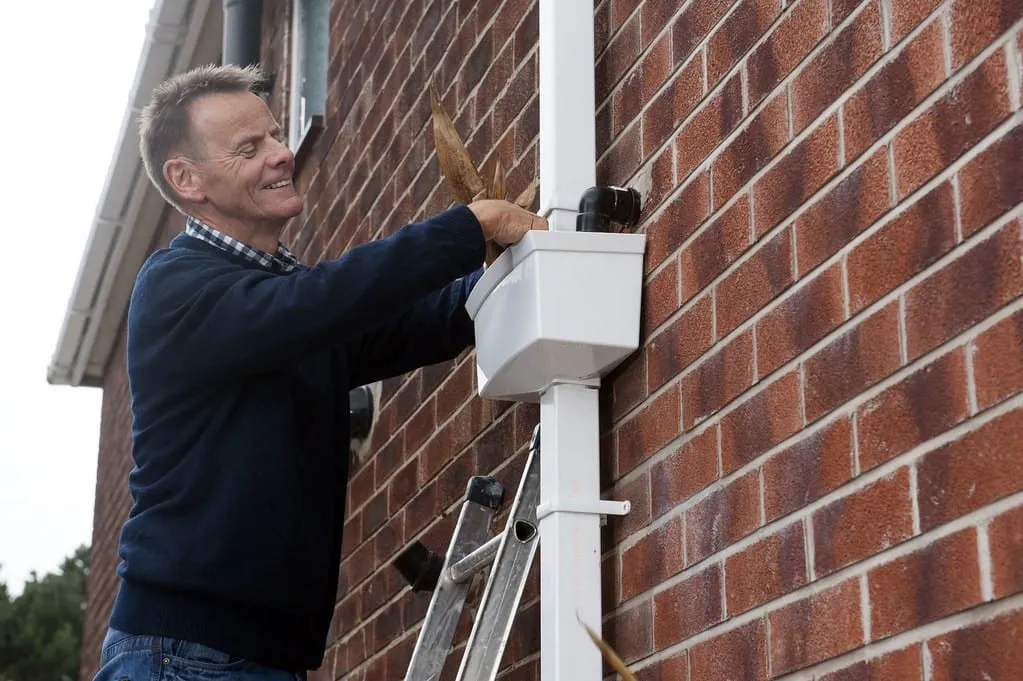
A general gutter clean matters every fall, and the timing rule is worth knowing regardless: clear gutters after most leaves have dropped but before the first hard freeze, since wet leaves left in a gutter through a freeze turn into a solid mass that can pull the gutter away from the fascia. But if your renovation added a dormer, an addition, or extended the roofline in any way, there's a second job that's easy to miss: confirming the new section actually ties into the existing gutter run correctly, and that water shedding off it lands somewhere the rest of the system was designed to handle.
This is also the fall to double-check any downspout that got moved or extended during the renovation itself, not just the ones that have always been there. A downspout re-routed around new hardscaping needs to still be discharging somewhere useful once autumn's volume of water actually tests it, rather than dumping against a foundation wall or a section of new concrete that was never meant to take standing water.
3. Check the grading around anything poured or excavated this year
New concrete and fresh grading haven't been through a full wet season yet, which means this fall is the first real test of whether water actually drains the way it was designed to. A patio or driveway graded correctly sheds water for decades without anyone thinking about it again; one that's even slightly off, most dangerously when the slope runs toward the house instead of away from it, starts causing damage quietly, and a first freeze on saturated soil against a foundation is worse than a freeze on soil that's had a chance to dry out properly. Our guide to patio grading and drainage covers the full mechanics of slope, swales, and where water actually needs to go; the fall-specific version of that check is simpler: after the next hard rain, walk the new work and confirm nothing is pooling against the house or against the new concrete itself.
Standing water that freezes under or against new concrete is also the direct cause of frost heave, and a first-year pour is more exposed to this than an established one, since the base underneath hasn't settled through a full freeze-thaw cycle yet. If you're seeing any pooling at all, it's worth having it graded properly before the ground freezes rather than waiting to see if it's still a problem in spring.
4. Inspect caulking and weatherstripping wherever new work meets old
Any exterior work finished this year, new siding, new trim, a repainted exterior, comes with fresh caulk at every joint and seam, and that caulk hasn't been tested by a real Ontario winter yet. Caulk that's cracking, shrinking, or pulling away lets outside air in at exactly the joints that matter most for keeping a heated house sealed, and a first-year seal is more likely to have a missed spot than one that's been checked and touched up for several seasons running. Walk the exterior specifically where new work meets old: around new windows, along new trim, at the transition between fresh siding and an untouched section of the house.
Same logic applies to a fresh exterior paint job. An exterior painting project like the ones we finish in Niagara Falls always includes recaulking trim and siding joints as part of the prep, and that fresh caulk's actual test isn't the day it goes in, it's the first hard freeze-thaw cycle it goes through months later. If a joint looks slightly recessed or shows a hairline gap by late fall, that's the caulk telling you it needs a touch-up before winter, not a sign the original work was done poorly.
5. Rebalance HVAC airflow if the work added a room or moved ducts
A finished basement, an addition, or any renovation that moved or extended ductwork changes how air actually moves through the house, and that change hasn't been tested by daily furnace use yet. Fall is the right window to catch this: book an HVAC tune-up in September or October, and specifically ask the technician to check airflow balance to any room the renovation added or altered, not just the system's general operation. A damper that's slightly off, or a duct run sized for the space's original layout rather than its new one, is the kind of thing that shows up as one cold room in January if it isn't caught now.
The general fall furnace checks still apply on top of that: replace the filter with a fresh pleated MERV 8 to 11 filter rather than the cheapest fibreglass option, and replace carbon monoxide detector batteries while you're at it, since any change to ductwork is exactly the kind of work worth pairing with a CO check regardless of how routine the renovation itself was.
6. Protect new flooring from the specific mess fall actually brings
New hardwood or engineered flooring installed this year is going through its first seasonal humidity swing, and some gap opening up between boards as the air dries out through fall and winter is normal, not a sign of a bad installation. Running a humidifier proactively in early fall, aiming for 35 to 45 percent indoor humidity, is easier than trying to put moisture back into wood that's already contracted. What isn't normal is grinding wet leaves, road grit, or de-icing salt residue into a finish that hasn't had a full year to cure.
A boot tray and a mat at every exterior entry near new flooring earns its keep specifically this fall, more than it will once the finish has a year or two of wear on it. This matters most right at the entry closest to a renovated space. A flooring installation in Hamilton finished this past spring is still inside its first year of wear, and the fall debris tracked in over the next two months is landing on a finish that's more vulnerable to grit and moisture than it will be once it's fully settled in.
Frequently asked questions
My renovation finished in early fall. Is it too late to do any of this before winter?
No, but prioritize by what's most exposed. New concrete that's had at least 30 days to cure and new caulking are worth checking first, since both are directly exposed to freeze-thaw cycling. HVAC rebalancing and flooring humidity management matter, but they're less time-sensitive against the calendar and can still happen once the furnace is already running.
Do I need to do all of this every fall, or just the first year after a renovation?
Just the first year for the renovation-specific checks. A new concrete pour needs its first seal on this kind of schedule, but once it's sealed and has been through a winter, it moves onto the standard 3 to 5 year resealing cycle like any other driveway. Caulking, grading, and flooring settle into normal wear patterns after their first full season, at which point the generic fall maintenance list is genuinely sufficient.
Can I do the concrete sealing and caulking checks myself, or does this need a professional?
Both are reasonable for a homeowner to check and often to do. Sealing is DIY-friendly with a pressure washer and a dry weekend; caulking touch-ups are a small job with a caulk gun and the right sealant type. Where it's worth calling a professional is if you find something more than routine wear, active water pooling against the foundation, a duct run that seems undersized for a new room, or concrete that's already showing scaling in its first year, since those point to something that needs fixing rather than just maintaining.
Bottom line
A renovation finished this year hasn't been tested by an Ontario winter yet, and that's the whole reason this list looks different from a generic fall checklist. New concrete needs its first seal on schedule. New caulking, new grading, and any ductwork the project touched are all going into their first real freeze-thaw season untested. Catch these now, while the fixes are still simple, and the same renovation that just got finished stays in the same condition through its second spring that it was in on the day the crew left. If winter work is next on your mind once these checks are done, our guide to what can and cannot be done during an Ontario winter renovation picks up from here.