Key Takeaways
- Indoor renovation work, kitchens, bathrooms, basements, and interior painting, is largely winter-agnostic once the space is heated. It's exterior concrete and exterior paint that carry hard, published temperature floors, not framing, drywall, tile, or interior finishes.
- The real winter risk indoors isn't the calendar, it's a job site where the heat gets cut for part of a day. Joint compound and tile mortar both have their own minimum ambient temperatures, generally in the 4°C to 10°C range, and they need that temperature held for a stretch afterward, not just at application.
- Winter's dry indoor air is a bigger practical threat to hardwood flooring and cabinetry than the outdoor temperature is. Wood acclimates to the room it's installed in, not the season outside it.
- December through March is the quiet stretch for renovation contractors in Ontario. That's a scheduling advantage more than a discount, and it's most useful for exactly the kind of project, a kitchen, a bathroom, a basement, that never had a weather problem to begin with.
Can you renovate a kitchen or bathroom in an Ontario winter?
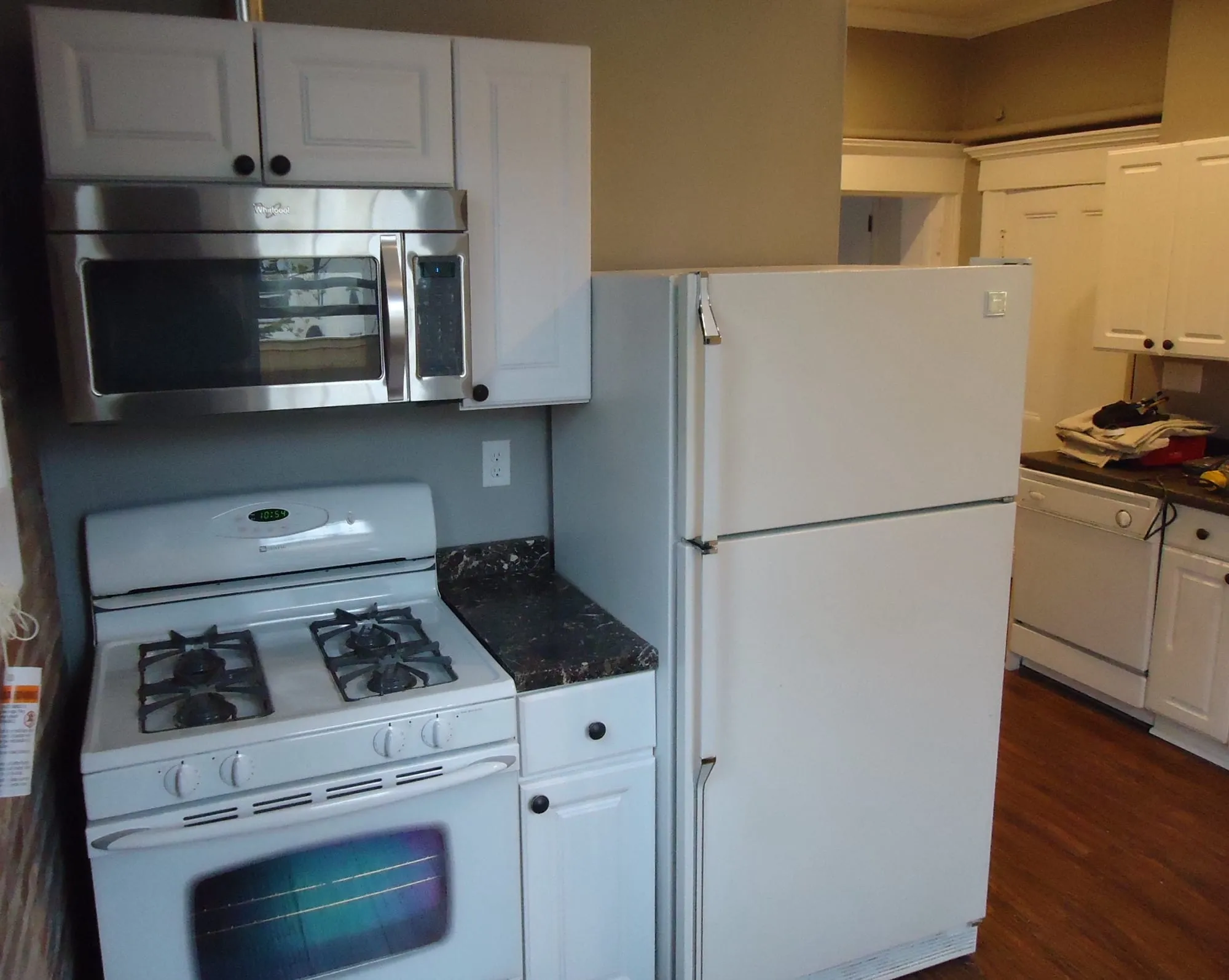
Yes, and for most of the project it changes nothing at all. A kitchen or bathroom renovation happens inside a heated envelope: framing, electrical, plumbing rough-in, drywall, tile, cabinetry, and paint all go in under the same roof at the same controlled temperature whether it's July or January. The trades that actually depend on outdoor weather, a concrete pour or an exterior repaint, aren't part of a kitchen or bathroom job at all.
What does change in winter is what's happening around the project. Material lead times can stretch over the holidays. Daylight is shorter, which matters more for a crew relying on natural light in an older home than it does for the schedule itself. And if the renovation needs a window swapped or an exterior wall opened, that piece gets scheduled and weather-protected the same way it would be for any exterior task in the cold. None of that is a reason to wait until spring for the parts of the project that happen entirely indoors.
Does interior paint need warm weather inside a heated house?
Less than people assume, but it isn't completely irrelevant either. Sherwin-Williams' own guidance for interior application recommends keeping the room above roughly 10°C, with a comfortable working range closer to 18°C to 25°C, and relative humidity somewhere between 40% and 70% (Sherwin-Williams, Late-Season Painting, retrieved 2026-09-04). Outside that humidity band, paint either dries too fast to level properly or cures too slowly and risks an uneven film. Benjamin Moore doesn't publish one universal interior number, because the real variable is the room, not the season: their own materials point out that unlike an exterior wall, an interior surface is something you can actually control the temperature and humidity of before the crew arrives (Benjamin Moore, temperature guide, retrieved 2026-09-04).
The practical failure mode isn't a cold December living room, it's a mid-renovation house where the furnace has been disconnected for other work, or a newly built addition that doesn't have heat running yet. A contractor doing interior painting in Hamilton on an occupied, heated home doesn't think about the calendar at all. A contractor painting inside a gutted addition with no HVAC connected yet treats it exactly like a cold-weather job, because at that moment, it is one.
Does tile installation care about temperature in a heated room?
Yes, more than most homeowners expect, and this is one of the few genuinely indoor-specific thresholds worth knowing. Mapei's ceramic and porcelain tile mortars specify a minimum ambient and substrate temperature of 4°C, with a maximum around 35°C, regardless of whether the work is indoors or outdoors (Mapei ceramic tile mortar technical data). Custom Building Products sets a similar floor for its VersaBond and MultiSet lines: ambient and surface temperature above 10°C, held for 72 hours after the mortar goes down, not just at the moment of installation (Custom Building Products, VersaBond technical data sheet).
That 72-hour window is the part that actually matters for a winter job. A heated room at 9 a.m. and an unheated one overnight, because a job site heater got shut off at the end of the day, or a furnace hasn't been reconnected yet, can put a curing tile floor below that threshold without anyone realizing it happened. The fix isn't waiting for spring, it's keeping the space at temperature continuously through the cure window, the same discipline a crew would use on any job, at any time of year, in an unheated space.
Does dry winter air damage hardwood, cabinets, or drywall?
This is the risk that's genuinely tied to the season, more than the temperature itself. Ontario homes run drier indoor air in winter because forced-air heating pulls moisture out as it warms outside air, and Health Canada's recommended year-round indoor humidity range is 30% to 50% relative humidity, a band that's easy to hold in summer and genuinely hard to hold once the furnace is running flat out in January (Health Canada guidance, cited via Homeowner.ca, retrieved 2026-09-04). Fall below that and the effects are cumulative: the National Wood Flooring Association's target range for hardwood is a similarly narrow band, and wood that acclimates in a dry room, or gets installed before the HVAC system has run long enough to stabilize conditions, is the flooring industry's most common cause of winter gapping and cupping complaints, not the cold itself (NWFA relative humidity guidance, summarized by PID Floors, retrieved 2026-09-04).
Drywall has its own version of the same problem. Joint compound needs the room to stay above roughly 10°C for 48 hours before, during, and after taping, with an ideal range closer to 18°C to 27°C and 20% to 40% humidity, according to gypsum manufacturer guidance (CertainTeed, winter gypsum board installation, retrieved 2026-09-04). Cold, damp compound doesn't just take longer to dry, it can crack or delaminate at the joints months later, which is a bigger deal on a renovation than a new build because it shows up as a callback on a finished room. None of this is a reason to skip winter renovation. It's a reason a good crew acclimates flooring and cabinetry in the actual room for a few days before installing, and runs the HVAC system continuously rather than intermittently, whatever month it is.
Is a basement renovation actually a good project to do in winter?
In a lot of ways, yes, more than people assume. A basement renovation is the most winter-agnostic project in the house: there's no roof, siding, or exterior wall being opened, and the concrete floor and foundation walls are already in place and cured long before framing starts. The one place winter genuinely helps rather than just tolerates the work is water diagnosis. A foundation crack or seepage point that only shows itself during spring thaw or a heavy summer storm is comparatively dry and easy to inspect and seal correctly in winter, when the ground around the house is frozen and there's no active water pressure pushing against the wall (RadonSeal, waterproofing a basement in winter, retrieved 2026-09-04). If you're planning a basement renovation in Toronto in an older home with a foundation that's never been fully assessed, that diagnostic window is a real advantage, not just a scheduling convenience.
The one piece of a basement job that does touch the outdoors is an egress window, if the project needs to cut a new opening into the foundation for a legal bedroom or secondary suite. Frozen ground makes that excavation slower, since the crew is working through frost rather than loose soil, though the ground directly against a heated foundation wall is typically less frozen than open ground a few feet away, because of heat loss from the house itself. Most contractors call fall the smoother season for this specific piece of work and treat winter as workable but slower, which is worth planning into the schedule rather than treating as a surprise (Brenne Builders, installing an egress window in frozen ground, retrieved 2026-09-04).
Is winter actually cheaper, or just less busy?
Mostly less busy, and that's still worth something. Renovation demand in Ontario follows the same pattern as concrete and exterior painting: everyone wants their kitchen or bathroom finished in time for spring or summer, so contractor calendars fill up fastest for a start date in April through June. December through March is the industry's genuine slow season, which shows up as faster start times and more flexible scheduling rather than a guaranteed discount, since material and labour costs don't actually drop with the temperature. Some contractors do offer off-season pricing to keep crews working through the quiet months, but treat that as a conversation to have directly rather than an advertised number, since it varies by contractor and isn't something we'd want to promise as a fixed figure.
The advantage compounds if the project involves a permit. Municipal building departments see the same seasonal rush as contractors do, so a permit application submitted in January for a bathroom renovation in Guelph or a kitchen reno anywhere else in the region is competing with a much shorter queue than the same application filed in April.
How does a contractor actually keep a job site warm enough in January?
The same way any heated interior space stays heated: temporary electric or indirect-fired propane heaters running continuously through the areas under active work, especially in a space where the permanent furnace isn't reconnected yet or the room has an exterior opening, like a window or door swap happening on the same schedule. The detail that actually matters is the type of heater. A direct-fired combustion heater burns fuel inside the space and releases water vapour as a byproduct, which works against everything discussed above: it's fighting the exact drying and curing conditions that paint, joint compound, and tile mortar all need. An indirect-fired heater, one that vents its combustion outside the room, keeps the space warm without adding that moisture back in. It's a small equipment choice, but it's the difference between a job site that's actually ready for the next trade and one that only looks ready.
What can't be done outdoors during an Ontario winter?
Anything that touches exterior concrete or exterior paint runs into real, published temperature limits that indoor work simply doesn't share. A concrete driveway, patio, or footing has to clear specific air and concrete temperature thresholds under CSA A23.1, and pouring outside that window means a full cold-weather protection regime rather than a normal pour, which is its own subject with its own numbers, covered in our guide to the best time of year to pour a concrete driveway. Exterior paint runs into a similar wall: manufacturer minimum temperatures, dew point, and direct sun on a wall surface all narrow the realistic window to spring and early fall in this region, which we cover in full in the best season to paint an Ontario home's exterior. If your project spans both, an interior renovation this winter and an exterior repaint or a driveway pour once the weather turns, that's a completely normal way to sequence a larger project, not a sign that one part of it is behind schedule.
Winter also isn't kind to anything exterior and structural that's just sitting there rather than being actively built. Snow load and ice buildup on an outdoor concrete structure, a set of steps, a retaining wall, a pool deck, carries its own risks that have nothing to do with a renovation schedule and everything to do with what's already built. We go into that separately in snow load and ice on outdoor concrete structures, which is worth a read if your winter project is next to one of those rather than replacing it.
Frequently Asked Questions
Do I need to wait until spring to start a full kitchen gut?
No. Demolition, rough-in, drywall, cabinetry, and interior painting all happen indoors under controlled conditions regardless of the season. The only realistic reason to delay is if the project involves an exterior wall change, like a new window or an addition, where the exterior portion follows its own weather-dependent schedule.
Will a bathroom renovation take longer in winter?
Not because of the season itself. A bathroom renovation's timeline is set by permit review, material lead times, and the trade sequence, tile, waterproofing, fixtures, the same as any other month. What can add real time is a holiday-season material order or a job site where heat isn't running continuously, which slows tile and joint compound cure regardless of the calendar date.
Is it true that paint won't dry in a cold house?
It's true that paint won't cure properly in a house that's genuinely cold, meaning well under 10°C, which usually only happens mid-renovation when the furnace is disconnected or an addition has no heat source yet. An occupied, normally heated Ontario home in January is well within the range interior paint is designed for.
Does our full renovation calendar cover more than just winter?
Yes. This post is one piece of a broader look at how the seasons affect renovation work across the year in this region, covered start to finish in our season-by-season guide to renovating in Ontario, which is the better starting point if you're still deciding when to begin rather than confirming that winter specifically works.
Bottom line
Indoor renovation work doesn't run on the same clock as concrete and exterior paint, because it isn't exposed to the same weather. A kitchen, bathroom, or basement renovation succeeds or struggles based on whether the space stays at a stable, heated temperature and humidity through demolition, rough-in, tile, and finishes, which is true in July and just as achievable in January. The genuine winter-specific risks, dry air pulling moisture out of wood flooring, a job site heater cutting out overnight during a tile cure, a direct-fired heater adding humidity back into a room trying to dry, are all things a good crew already manages as a matter of process, not something that requires waiting for warmer weather. If your project also touches an exterior wall, a driveway, or a repaint, plan that portion around the calendar windows in our concrete and exterior paint guides, and let the indoor half of the job run on whatever schedule actually works for your household.