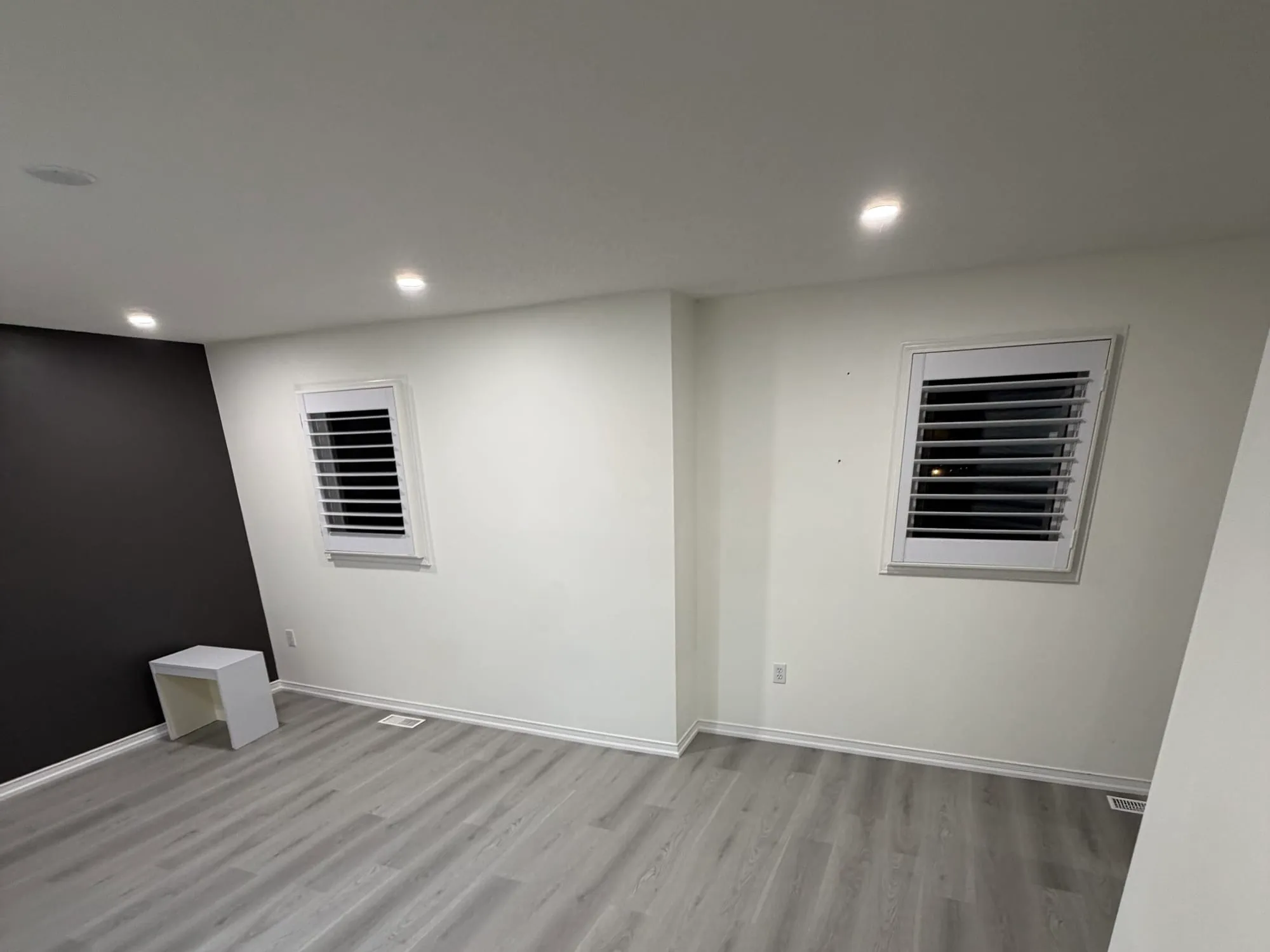
Every homeowner who asks us about a basement suite eventually asks the same follow-up question: will it pay for itself? The honest answer depends on which city the house sits in, how much foundation work the basement needs to get there, and how much of the gross rent actually survives contact with vacancy, maintenance, and property tax. Here's that math, run on real rent and cost data rather than the version most renovation pitches lead with.
Key Takeaways
- A legal secondary suite in the GTA rents for meaningfully more than the same suite in Hamilton or Kitchener-Waterloo, and the gap is wide enough to change the payback math on its own.
- Full legalization of a basement suite in Ontario typically runs $45,000 to $130,000 or more, depending on whether the basement already has a workable layout or needs underpinning, a new entrance, or a full mechanical separation.
- Gross rent isn't what lands in a homeowner's pocket. Vacancy, maintenance, utilities, and a possible property tax reassessment after the second unit is registered all take a bite before the payback clock actually starts.
- Being legal changes both sides of the equation. It can raise how much of the rent a lender will count toward mortgage qualification, and it's the difference between a rent cheque that helps your file and one an insurer can use against you after a claim.
What a basement suite actually rents for
Basement suite rents aren't tracked as their own category in most public data. CMHC's rental market surveys and most rent-index services report on the market as a whole, one-bedroom and two-bedroom units across the primary and secondary rental markets, without breaking out below-grade units specifically. What we do have is a reliable regional benchmark: general market rent for a comparable one-bedroom unit, which a legal basement suite tends to sit close to, usually somewhat below it given lower ceiling heights and less natural light than an equivalent above-grade unit.
As of August 2026, average one-bedroom asking rent runs $2,099 a month in Toronto, $1,650 in Kitchener, and $1,550 in Hamilton, according to Zumper's rent research data for each city. That's roughly a $550 monthly gap between Toronto and Hamilton for a comparable unit, before a basement suite's own discount for headroom and light even enters the picture.
| City | Average 1-bedroom market rent (Aug. 2026) | Source |
|---|---|---|
| Toronto | $2,099/month | Zumper |
| Kitchener | $1,650/month | Zumper |
| Hamilton | $1,550/month | Zumper |
We build basement renovations in all three of those cities, and the rent gap between them is often the single biggest lever in whether a suite pays for itself quickly or slowly, well before construction cost or finishes enter the conversation.
CMHC's own data shows the same regional pattern one bracket up, at the two-bedroom level. The Greater Toronto Area's average purpose-built two-bedroom rent rose 3.5% to $2,034 a month in CMHC's most recent survey, while St. Catharines-Niagara averaged $1,527 (up 5.5%) and Windsor averaged $1,454 (up 3.6%). Vacancy is moving too: GTA purpose-built vacancy climbed to 3%, and condo apartment vacancy in the same region held near 1%, even as turnover rents on those units fell 2.5%, per CMHC's own 2025 rental market analysis. That's a sign the secondary market, exactly where a basement suite competes for tenants, has gotten less landlord-favourable than it was a few years ago, not more.
What legalizing the suite actually costs
The other half of the equation is the number most rental-income pitches skip past. According to RenoCalc's 2026 Ontario pricing guide, legalizing an already-finished basement, bringing it up to secondary-suite code without a full rebuild, typically runs $45,000 to $95,000. A full conversion of an unfinished basement, egress windows, new entrance, layout, and mechanical separation all included, runs $60,000 to $130,000 or more.
| Line item | Typical range |
|---|---|
| Separate entrance | $5,000 - $15,000 |
| Egress window, per opening | $3,000 - $8,000 |
| Fire separation drywall assembly | $4,000 - $8,000 |
| ULC-listed fire-rated door | $1,500 - $3,000 |
| Kitchen rough-in and finish | $8,000 - $15,000 |
| Bathroom rough-in and finish | $6,000 - $12,000 |
| Electrical sub-panel and ESA inspection | $3,000 - $6,000 |
| Permits and drawings | $2,000 - $5,000 |
Source: RenoCalc, 2026 Ontario pricing guide, typical figures for a roughly 700-1,000 sq. ft. basement.
What actually decides where a project lands in that range is the basement's starting condition, not its finishes. A basement that can't clear the 1.95 m ceiling minimum a secondary suite needs requires underpinning or bench footing to get there, and that alone can add tens of thousands on top of either range above. Same story with egress: swapping an existing basement window for a code-sized egress unit is a very different cost than cutting a brand-new opening into solid concrete, which we cover in more detail in our basement egress window requirements guide. The rent numbers in the section above are close to fixed by geography. The cost side of this math is the part where an individual basement can move the answer by tens of thousands of dollars, which is exactly why a firm number only comes after someone's actually looked at your foundation.
The payback-period math, and why the gross number lies
The simplest payback calculation is construction cost divided by monthly rent. It's also the version that overstates every basement suite's actual return, because none of what a landlord collects in rent is money that reaches a bank account undiminished.
Start with the simple version. A $75,000 conversion, near the middle of RenoCalc's full-conversion range, renting for $1,650 a month in Kitchener pays back its construction cost, on paper, in about 46 months, just under four years. The same $75,000 conversion renting for $2,099 a month in Toronto pays back in about 36 months. That's the number that makes a basement suite look almost too good to pass up, and it's also the number that ignores everything that happens between a tenant's rent cheque and a homeowner's actual bank balance.
Four things eat into it before the payback clock should even start:
- Vacancy. No unit rents every month of every year. A month or two of turnover vacancy a year is normal, not a sign anything went wrong, and it comes straight off the twelve months the simple math assumed were all paid.
- Maintenance. A second kitchen, a second bathroom, and a second HVAC zone all add wear that wasn't there before. Appliance repairs, plumbing calls, and general upkeep on a rented unit tend to run higher than the same square footage used as a rec room, since a tenant reports problems a homeowner living alongside them might otherwise put off.
- Utilities. Depending on how the suite is metered, a landlord absorbing heat, water, or hydro for the unit is paying part of the tenant's living costs out of the rent collected, not on top of it.
- Property tax reassessment. Adding a legal second unit is exactly the kind of change that can prompt MPAC to reassess a property's value, since a registered secondary suite is additional finished, income-producing space on the same lot. That's a real ongoing cost, though how much it moves the number varies enough by municipality and assessment cycle that we won't put a figure on it here. It's worth asking your municipality or MPAC directly rather than assuming either a negligible bump or a dramatic one.
None of this makes a basement suite a bad investment. It does mean the real payback period runs longer than the gross-rent-divided-by-cost number suggests, often by a year or more once vacancy and maintenance are netted out honestly rather than assumed away.
Being legal changes both sides of the number
Whether a suite is actually legal, permitted, inspected, and signed off, changes what it's worth on both the income side and the cost side of this math, not just whether an inspector shows up during construction.
On financing, CMHC's secondary suite refinance program allows homeowners to refinance up to 90% loan-to-value specifically to build or complete a self-contained secondary suite, provided the finished unit complies with all applicable bylaws and isn't used as a short-term rental. The program caps out at properties valued under $2,000,000 and applies standard debt-service limits, a 39% maximum GDS (Gross Debt Service) ratio and 44% maximum TDS (Total Debt Service) ratio. That financing route doesn't exist for an unpermitted conversion.
On mortgage qualification afterward, how much of the suite's rent a lender will actually count toward income varies by lender. Big banks tend to count around 50% of a secondary suite's rental income when qualifying a borrower, while credit unions and other B lenders will sometimes count up to 100%, and a legal, self-contained, bylaw-compliant suite is treated more favourably across the board than one that isn't. An illegal suite's rent might still show up in a landlord's bank statements every month. It just won't reliably show up on a mortgage application.
Insurance follows the same line. An unpermitted basement apartment can void a homeowner's coverage on exactly the kind of claim a rental unit makes more likely, a kitchen fire, a flooded bathroom, a tenant dispute. We've covered what actually makes a suite legal, and what it takes to get there, in Legal Basement Suites in Ontario. It's worth reading before running any of the numbers above against a suite that isn't legal yet, since an illegal suite's rent isn't really comparable to a legal one's, on either side of the ledger.
The cost that doesn't show up on a spreadsheet
Every number above treats a basement suite as a financial instrument. It's also a second household living inside your house, and that has a cost the spreadsheet doesn't capture.
A tenant calls when the furnace stops, when a faucet drips, when a smoke alarm chirps at 2 a.m. for a battery that needed changing three weeks ago. Turnover means showings, credit checks, cleaning, and often a stretch of vacancy while a new tenant is found. And a shared building, even one with two fully separate units and their own entrances, means shared walls and a level of proximity to a stranger's daily life that some homeowners are glad to trade for the income and others find isn't worth it, regardless of what the payback number says.
None of that should stop a homeowner from building a suite if the financial math otherwise works. It's worth being honest about before signing a lease, though. The financial return and the experience of actually being a landlord are two separate questions, and a homeowner who's only priced out the first one is often surprised by the second.
Frequently Asked Questions
How much does a basement suite actually rent for?
It depends heavily on the city. As of August 2026, general one-bedroom market rent runs about $2,099 a month in Toronto, $1,650 in Kitchener, and $1,550 in Hamilton, per Zumper's rent research. A legal basement suite in the same city tends to land somewhat below that benchmark, given lower ceiling heights and less natural light than an above-grade unit of the same size.
What does it cost to legalize a basement suite in Ontario?
Legalizing an already-finished basement typically runs $45,000 to $95,000. A full conversion of an unfinished basement, including egress windows, a new entrance, and complete mechanical separation, runs $60,000 to $130,000 or more, according to RenoCalc's 2026 Ontario pricing guide. Underpinning, where the basement needs it to clear the suite ceiling minimum, adds tens of thousands on top of either range.
Can I use a basement suite's rent to qualify for a bigger mortgage?
Often, yes, if the suite is legal. Lenders vary: big banks tend to count around 50% of a secondary suite's rental income toward mortgage qualification, while some credit unions and B lenders count up to 100%. CMHC also offers a refinance program specifically for building or completing a self-contained secondary suite, up to 90% loan-to-value. An unpermitted suite's rent generally doesn't count toward either.
How long does it actually take a basement suite to pay for itself?
Longer than the simple math suggests. Dividing construction cost by monthly rent gives a number in the three-to-four-year range for most of the projects and rents in this piece, but vacancy, maintenance, utilities, and a possible property tax reassessment after legalization all reduce the rent that actually reaches a homeowner's pocket, which stretches the real payback period out further than the gross number implies.
Is a basement suite still worth it after all these deductions?
That depends on what a homeowner is weighing it against and how they value their own time. The financial case holds up reasonably well in higher-rent markets like Toronto, gets slower in lower-rent markets like Hamilton and Kitchener, and in every market it's a genuine second job, not a passive one, once tenant calls and turnover are part of the picture. That's a judgment for the homeowner, not a number we can hand over.
Running the numbers on your own basement
The rent, cost, and payback figures here are regional averages, not a quote for your specific basement. A basement's actual ceiling height, foundation condition, and layout move the legalization cost more than any of the averages above, and that's the number worth pinning down before deciding whether the rent justifies the build. For the fuller picture of what a basement renovation involves, structural work, moisture control, layout, and where a rental suite fits into that decision, see our complete guide to basement renovations in Ontario.