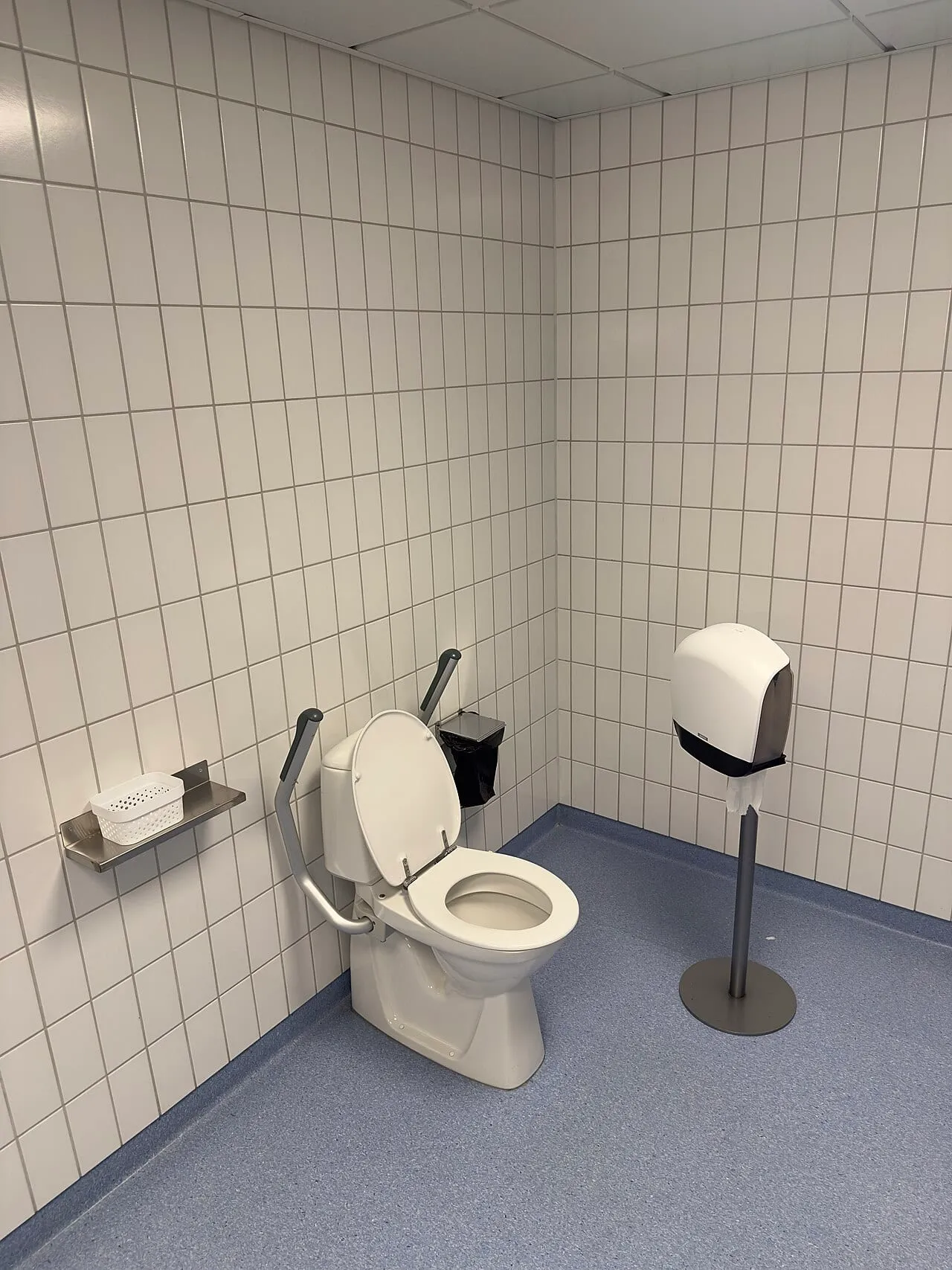
Search for "senior renovation grants" in Kitchener, Waterloo or Cambridge and you'll find lists that mix live programs with ones that ended years ago. The real list is shorter. Four programs genuinely help pay for accessibility and aging-in-place work in Waterloo Region right now: two federal tax credits anyone can claim if they qualify, a forgivable loan the Region of Waterloo delivers for lower-income homeowners, and a provincial program for people with a mobility disability. The Ontario credit most of those lists still mention is gone.
This post covers what each one pays, who qualifies, and the order to apply in, because two of them refuse to fund work that has already started.
Key Takeaways
- The federal Home Accessibility Tax Credit covers up to $20,000 a year of accessibility work for someone 65 or older, or eligible for the disability tax credit. It is non-refundable, and it is not reduced by government grants or forgivable loans.
- The federal Multigenerational Home Renovation Tax Credit is refundable and covers up to $50,000 of work to build a self-contained secondary unit so a senior or an adult with a disability can live with a relative. CRA lists it at 14.5 percent for 2025, a maximum of $7,250.
- The Ontario Seniors' Home Safety Tax Credit only covered the 2021 and 2022 tax years. It does not apply to work done now.
- The Region of Waterloo's Ontario Renovates program offers a forgivable loan of up to $25,000 for accessibility modifications to income-qualified homeowners. The 2026 application deadline falls in late fall, and no work can start before approval.
- March of Dimes' Home and Vehicle Modification Program, funded by the province, helps Ontario residents with a mobility disability pay for ramps, lifts and bathroom changes.
Home Accessibility Tax Credit (HATC)
The HATC is the one most households in the region will actually use, because it has no income test and no application. You claim it on your tax return.
Who qualifies. According to the CRA's home accessibility expenses page, the work has to be for a "qualifying individual": someone who is 65 or older at the end of the year, or someone eligible for the disability tax credit at any time in the year. Certain family members who support that person can also claim it.
How much. Up to $20,000 of eligible expenses per year, and that limit applies per dwelling, not per person. It is a non-refundable credit calculated at the lowest federal tax rate, which Finance Canada's report on the lowest-rate reduction puts at 14.5 percent for 2025 and 14 percent for 2026. On a full $20,000 of work, that is $2,900 for 2025 and $2,800 for 2026. The same report notes a temporary top-up credit that keeps a 15 percent rate on credit amounts above the first bracket threshold, so some filers will get slightly more. Older CRA pages still quote a $3,000 maximum, which was the figure at the old 15 percent rate.
What counts. The renovation has to be "of an enduring nature and integral to the eligible dwelling," and it has to either help the qualifying person get into the home and move around in it, or reduce their risk of harm there. Building materials, fixtures, equipment rental, building plans, permits and professional labour all count. That covers most of what goes into an accessible bathroom: blocking and grab bars, a curbless shower, a wider doorway, a comfort-height toilet.
What does not count. CRA excludes routine repairs and maintenance, household appliances, electronics, housekeeping or gardening services, financing costs, and renovations done mainly to increase the home's value.
Three details matter more than people expect:
- The year is fixed by the work, not the invoice. Expenses must be for work performed and goods acquired in the tax year you claim. A bathroom that starts in November and finishes in January straddles two years and two $20,000 limits.
- Grants do not shrink it. CRA states the credit "is not reduced by government assistance, including grants, forgivable loans, or tax credits, from the federal or a provincial or territorial government." So a forgivable loan from the Region does not cancel your HATC claim on the same job.
- It can overlap the medical expense credit. CRA says you can claim an expense both as a medical expense and as a home accessibility expense, where it qualifies for both.
Keep every receipt and invoice. CRA expects them to show the vendor, their GST/HST number, what was supplied, the dates, the amount and proof of payment. Our guide to designing an accessible, aging-in-place bathroom covers which features are worth the budget in the first place.
Multigenerational Home Renovation Tax Credit (MHRTC)
The MHRTC is for a different project: building a separate, self-contained unit so a parent, grandparent or adult relative with a disability can live with family instead of alone or in care.
How much. CRA's MHRTC page allows up to $50,000 of qualifying expenditures for each qualifying renovation, and lists the credit at 14.5 percent, a maximum of $7,250. That is lower than the 15 percent and $7,500 still printed in older CRA material, the same step the lowest federal tax rate took. Check the CRA page for the current-year rate before counting on an exact number. Unlike the HATC, it is refundable, so it pays out even if you owe no tax.
Who qualifies. Per CRA's eligibility page, the person moving in has to be 65 or older at the end of the year the renovation ends, or 18 to 64 and eligible for the disability tax credit. They have to live with a "qualifying relation," an adult who is their parent, grandparent, child, grandchild, sibling, aunt, uncle, niece or nephew. Both are expected to ordinarily live in the home within 12 months of the renovation finishing.
What the unit needs. A private entrance, a kitchen, a bathroom and a sleeping area, and it has to meet local building codes and permits. In practice that means a legal secondary suite, usually a basement conversion or an addition. Our explainer on legal basement suites in Ontario walks through what makes a unit legal.
The limits. Each qualifying individual can only be the subject of one claim in their lifetime. The renovation has to be finished in the tax year you claim it, and CRA's expenses page rules out any expense already claimed under the medical expense credit or the HATC. You can't count the same grab bar twice.
Permit rules for a new unit differ by city even inside the region. If the family home is in Waterloo, our page on basement suite renovations in Waterloo covers the city's permit fee and rental licensing rules. For a Kitchener property, legal basement suites in Kitchener covers the occupancy certificate the city checks before sign-off.
The Ontario Seniors' Home Safety Tax Credit has ended
This is the program most out-of-date lists still promote. It was real: Ontario's own fact sheet described it as a temporary credit where "seniors 65+ and family members living with them may get back 25% of up to $10,000 in eligible expenses per year for their principal residence in Ontario." The same Ontario fact sheet is clear about the dates: "The credit is available for the 2021 and 2022 tax years."
CRA now marks the Ontario schedule for the credit as no longer current, and the old ontario.ca page for it redirects to the Archives of Ontario. Work done in 2023 or later does not qualify. If an ad or a contractor tells you otherwise, ask them to point to a current government page.
Ontario Renovates, delivered by the Region of Waterloo
This is the one genuinely local program. It is funded by the federal and provincial governments through the Ontario Priorities Housing Initiative, and the Region of Waterloo delivers it across Waterloo Region. It is not a senior-only program, but the Region's application form lists "Senior Citizen (65+)" as a client type, and accessibility modifications for persons with disabilities are one of its two streams.
How much. The Region's 2026 fact sheet sets a maximum of $25,000 per dwelling for repairs and up to $25,000 for accessibility modifications. The accessibility amount "includes a grant portion up to $5,000 that does not require repayment." The rest is an interest-free loan that is forgiven after 10 years, dropping by 10 percent each year you stay. Sell the house in year six and you repay 40 percent of the loan.
What it covers. Ramps, handrails, chair and bath lifts, lowered counters, visual cues for doorbells and fire alarms, and bathroom modifications. It also covers the permits, drawings and inspection fees tied to that work.
What it does not cover. Cosmetic work (the fact sheet names "bathroom makeovers" and new kitchen cabinets and counters specifically), landscaping, routine maintenance, and, most importantly, "any modifications performed prior to loan approval."
Who qualifies. You have to own a home in Waterloo Region as your only property and principal residence, with an MPAC assessed value of $600,000 or less, with taxes, mortgage and insurance up to date. Household income has to sit at or below the Region's limits, which for 2026 are $41,210 for one person and $51,204 for two, rising with household size.
The process and the deadline. The Region inspects the home, issues a conditional approval, and then asks you for at least three contractor quotes for each repair. Work has to start within 120 days of approval. For 2026, the fact sheet asks households to apply before November 15, 2026 and have a signed agreement by December 15, while the application form itself says to apply before December 1, 2026. Treat the earlier date as the real one. Funding is limited and handed out first come, first served, and the Region warns the whole process can take several months.
March of Dimes Home and Vehicle Modification Program
The Home and Vehicle Modification Program is funded by the Ontario government and administered by March of Dimes Canada. It isn't age-based. To apply, you have to be a permanent Ontario resident, have a household income under the program's threshold, and have "a disability that impedes mobility and results in substantial restriction in activities of daily living." The province notes that applicants with a household income over $38,000 may be asked to contribute toward the cost.
Home modifications it covers include ramps, platform and stairway lifts, lifting and transfer devices, door widening, bathroom rearrangement, kitchen modifications and wet rooms. March of Dimes sets the current funding limits and handles applications directly, so confirm the amount with them before you plan around it.
What about city programs in Kitchener, Waterloo and Cambridge?
We did not find a city-run grant for seniors' accessibility renovations in any of the three cities. What each city does fund is additional housing units: Waterloo's ARU grant, Cambridge's one-time grant of up to $10,000 for additional residential units, and Kitchener's grant covering education development charges on new units. Waterloo's grant, for example, requires the unit to be rented at an affordable rate for at least five years, so these programs are built for rental units, not for a suite a parent moves into. If family is moving in, the MHRTC is the program that fits.
The order to do things in
- Check the income-tested programs first. If your household might qualify for Ontario Renovates or the Home and Vehicle Modification Program, apply before anything is built. Ontario Renovates will not fund work done before approval.
- Get the scope and quotes together. Ontario Renovates asks for three quotes per item. A clear, itemized scope from the start makes that easier. If you're planning accessible bathroom work, bathroom renovations in Cambridge and bathroom renovation costs in Kitchener show how we scope and price a bathroom in each city.
- Plan the calendar year. The HATC limit resets every January 1, and it is based on when the work is performed. A large project can sometimes be phased across two years.
- Keep everything. Receipts, invoices, permits and proof of payment support the tax credits later, and the Region needs its own paperwork for the loan.
Tax credits interact with the rest of your return in ways a blog post can't predict. If the numbers are large, a short conversation with an accountant before you file is worth it.
Frequently asked questions
Can I claim the Home Accessibility Tax Credit and get an Ontario Renovates loan for the same bathroom?
CRA says the HATC "is not reduced by government assistance, including grants, forgivable loans, or tax credits, from the federal or a provincial or territorial government." Ontario Renovates is federally and provincially funded, so the loan should not reduce your HATC claim. Confirm the specifics with your accountant.
Is the Ontario Seniors' Home Safety Tax Credit still available in 2026?
No. Ontario's fact sheet limited it to the 2021 and 2022 tax years, and its ontario.ca page now redirects to the provincial archives. Work done after 2022 does not qualify.
My mother is 72 and we're building her a basement suite. Which credit applies?
Probably the Multigenerational Home Renovation Tax Credit, if the suite has its own entrance, kitchen, bathroom and sleeping area, meets local codes, and she and a qualifying relative will live in the home within 12 months. You can't also claim the same expenses under the HATC.
Do I have to be a senior to get Ontario Renovates?
No. It is for low to moderate-income homeowners who meet the Region's income and home value limits. Seniors are one of the client types on the form, and the accessibility stream is for modifications for a person with a disability.
Can a contractor apply for these programs for me?
The tax credits are claimed on your own return. Ontario Renovates and the Home and Vehicle Modification Program are applications from the homeowner or the person with the disability. A contractor's role is the quotes and the itemized invoices those applications and claims depend on.