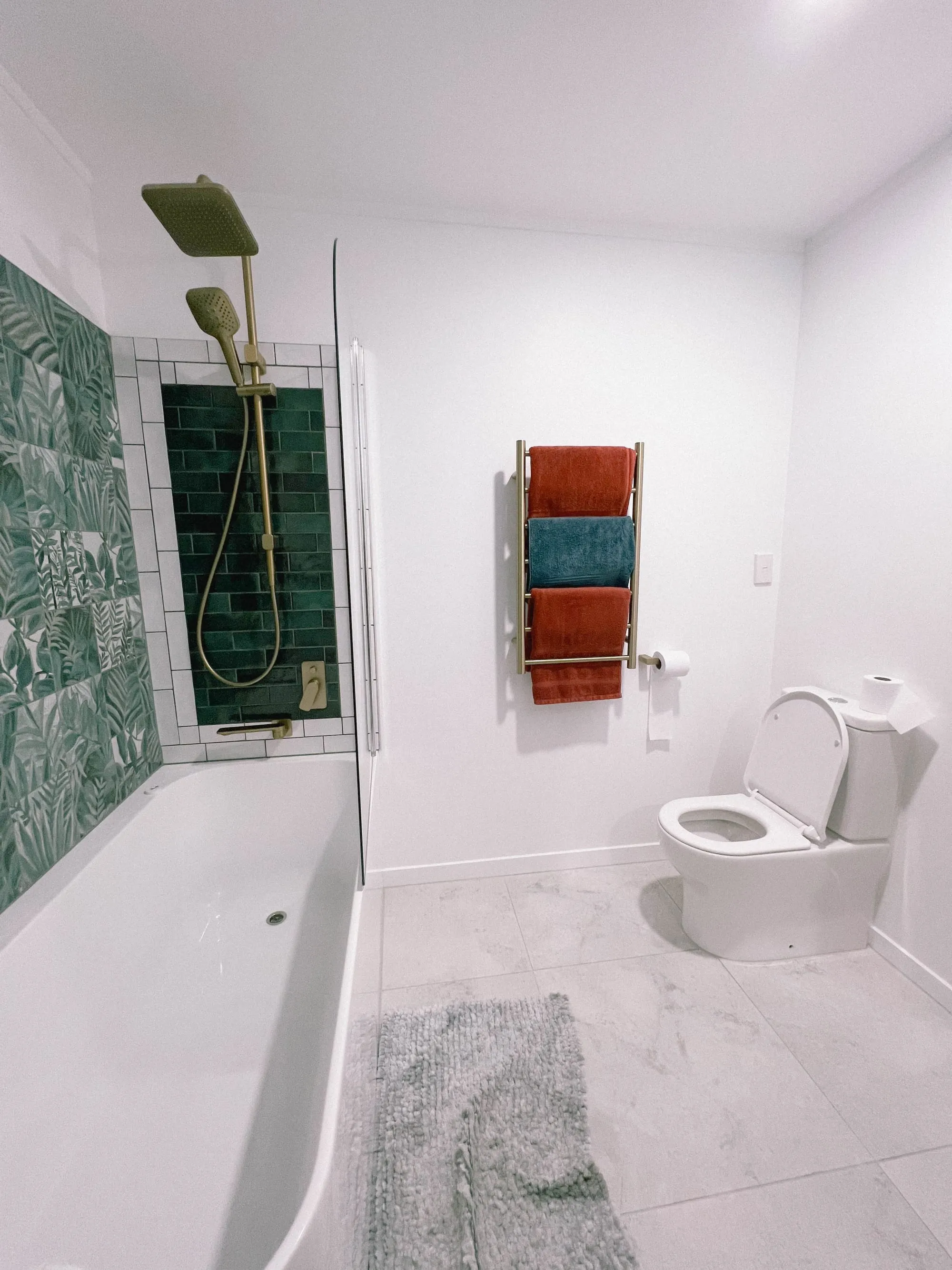
Standing on a cold tile floor in January is the single most common reason an Ontario homeowner starts pricing out heated bathroom floors. The question that follows is almost always the same: does it actually cost what people say, and is it worth adding to the budget. Electric radiant heat is a thin mat or cable installed directly under the floor, wired to its own thermostat. It's the version that goes into nearly every residential bathroom reno, not the hydronic, boiler-fed systems used for whole-house heating. It comes with a fairly predictable installed cost, a fairly small running cost, and a fairly honest answer on resale, worth hearing before you assume it pays for itself.
Key Takeaways
- Installed electric radiant heat for a bathroom typically runs $22 to $40 per square foot in the GTA once labour is included, putting a standard 75-square-foot bathroom at roughly $1,800 to $3,000 before any electrical panel work.
- Running it costs far less than most people expect: a typical bathroom system draws under 1,000 watts, adding roughly $9 to $16 a month on a daily winter schedule, less on a shorter, timed one.
- It rarely adds real time to a bathroom renovation, because the steps that take the longest, subfloor prep, waterproofing, and letting the tile-setting bed cure, are steps a tiled bathroom floor needs anyway.
- It works best under tile and engineered hardwood. Solid hardwood is the floor type to avoid over a heated subfloor; laminate and vinyl can work, but only when the specific product is rated for it.
- Treat it as a comfort upgrade, not a resale strategy. It rarely shows up as its own line item on an appraisal the way a fully redone bathroom does.
How much does it actually cost to install?
A licensed, fully installed electric radiant floor for a bathroom in the GTA runs $22 to $40 per square foot once the heating mat, thermostat, floor sensor, and labour are all counted, according to Red Stone Contracting's 2026 Toronto cost breakdown. That figure excludes the finished flooring itself and any electrical panel work, since it's just the cost of the heating system going in underneath whatever tile or floor covering you've already chosen.
| Bathroom size | Installed cost (electric, GTA) |
|---|---|
| Small powder room (~35 sq ft) | $900 – $1,500 |
| Standard bathroom (~75 sq ft) | $1,800 – $3,000 |
| Larger spa ensuite (~120 sq ft) | $3,000 – $4,800 |
| New dedicated circuit/breaker | $400 – $900 |
| Panel upgrade (common in older homes) | $1,500 – $3,500 |
Two things push a quote toward the high end of that range. The first is a bathroom with an awkward layout, since a mat has to be cut and pieced around a toilet flange, a vanity base, or a tub apron rather than rolled out in one clean sheet. The second is an older home's electrical panel. A dedicated 15- or 20-amp circuit is a routine add at $400 to $900. But if the panel itself doesn't have room for another breaker, Red Stone's same cost breakdown puts a panel upgrade at $1,500 to $3,500. That's the number that actually decides whether heated floors are a small add-on or a meaningfully larger one.
It's also worth knowing why a DIY heating mat kit looks so much cheaper online. WarmlyYours prices its own Ontario mat and roll product at $10 to $12 per square foot, which is materials only, no electrician, no tile setter. That's the number a manufacturer's website quotes, and it's real, but it's not comparable to a fully installed price. If you're planning a full bathroom renovation in Waterloo or a similar project elsewhere, ask for the heated-floor line item as installed, with labour, not as a standalone product price, or the two quotes won't be comparing the same thing.
What does it cost to run once it's in?
Less than most people assume. Red Stone's own cost breakdown puts a typical 75-square-foot bathroom floor's draw at roughly 900 watts, about 10 to 12 watts per square foot, which is less than a hair dryer. At Ontario's current Regulated Price Plan tier-1 rate of 12.0 cents per kilowatt-hour, set as of November 1, 2025 (Ontario Energy Board rate change, republished by Newswire), that works out to a little over 10 cents an hour to run.
What that adds up to monthly depends entirely on the schedule. Red Stone's own estimate for a 75-square-foot bathroom run on a daily schedule lands at $9 to $16 a month during the coldest stretch of the year, and a shorter, timed run brings that down further. Either way, it's a small enough number that it shouldn't be the deciding factor in whether to add it. A programmable thermostat set to warm the floor 30 to 45 minutes before your usual shower time, rather than running continuously, is the easiest way to keep the cost near the low end of that range.
Does it delay a bathroom renovation?
Barely, and the reason is worth understanding rather than just taking on faith. The heating mat or cable itself installs fast, it rolls or staples into place in a few hours once the subfloor is ready. What actually takes time in that stage of a bathroom is time a tiled floor needs whether or not there's a heating element under it. Red Stone puts the full sequence, from prep to finished tile, at 5 to 9 days:
- Subfloor prep and inspection
- Waterproofing membrane
- Heating mat or cable installed and tested
- Electrical rough-in and circuit inspection
- Thinset applied over the mat, with its own mandatory cure time before anything can be set on top
- Tile set and grouted
That's largely the tile installation timeline with the heating mat riding along inside it, not a separate phase bolted onto the end.
The one step worth not rushing is testing the mat or cable's resistance against the manufacturer's spec before thinset covers it, since a damaged element is far cheaper to catch at that point than after the tile is grouted over it. Our bathroom renovation timeline, week by week walks through where flooring and electrical rough-in actually land in a full gut renovation, and heated floor installation slots into that same window rather than pushing the schedule out on its own.
Which floor types actually work with it?
Tile is the best match by a wide margin. Ceramic and porcelain conduct heat efficiently and don't expand or contract with temperature the way some other materials do, which is exactly why heated floors and tile bathrooms are almost always discussed together in the first place. Beyond tile, Warmup's underfloor heating compatibility guide is a useful reference point for the other common choices:
- Engineered hardwood: the wood option to choose over solid hardwood, since it holds up better as the floor temperature cycles.
- Solid hardwood: the floor type to be careful with. Warmup caps wood floor surface temperature at 82°F specifically so boards don't move.
- Laminate: works over a heated floor, but check that the specific product is rated for it before installing.
- Vinyl: also works, with the same caveat, confirm the manufacturer's rating rather than assuming any vinyl product qualifies.
A thermostat with a floor sensor keeps the surface within whatever limit the flooring manufacturer sets, so it's not something you have to manage by hand once it's installed correctly. If you're weighing tile against an acrylic surround or a different bathroom surface altogether, our tile vs. acrylic surrounds comparison covers that decision on its own terms, separate from the floor.
Is it worth it at resale, or just a comfort upgrade?
Be honest with yourself here: it's a comfort upgrade, not a resale strategy. Floor heating manufacturers, WarmlyYours among them, advertise figures like a 24% resale bump and a 50 to 80% cost recoup, but that's a company that sells heating mats publishing a number about its own product, not an independent appraisal study. In practice, an appraiser pricing a renovated bathroom is valuing the bathroom as a whole: new tile, a new vanity, updated plumbing and fixtures. Heated floors ride along inside that number rather than getting appraised as their own line item, the way a legal secondary suite or an added bathroom would.
Where heated floors genuinely earn their cost is in daily use, not in a future sale. If you're planning to stay in the house for years, that's a reasonable trade. The couple thousand dollars it adds to a bathroom renovation in Guelph or a bathroom renovation in Oakville buys a warm floor every winter morning for as long as you live there, a real and durable benefit even without a resale number attached to it. If the renovation is being done specifically to sell soon after, the money is usually better spent on the finishes a buyer notices walking through the door, not on a feature they'll only notice once they've moved in.
Frequently asked questions
Can I add heated floors to an existing bathroom without a full renovation?
Only if the floor is already coming up. The mat or cable has to sit directly under the tile or floor covering, on top of the subfloor, so there's no way to retrofit it without lifting the existing floor first. If your floor isn't already scheduled to be replaced, adding heated floors on its own usually isn't worth the disruption of pulling up a perfectly good floor just to add it.
Do I need a licensed electrician for the installation?
Yes. The heating element itself is typically installed by the flooring contractor or tile setter. The thermostat and the dedicated circuit it runs on need a licensed electrician, both for safety and because most municipalities require an electrical permit and inspection for a new circuit regardless of what it's powering.
How long does an electric radiant floor actually last?
Warranty lengths vary by brand, but a 25-year warranty on the mat or cable is standard among the major manufacturers, SunTouch among them, and there are no moving parts to wear out the way there are in a furnace or a boiler. The most common failure point isn't the heating element itself, it's physical damage during installation, which is why testing the mat's resistance before and after tile is set is a standard step, not an optional one.
Is it worth it in every bathroom, or just some?
It makes the most sense in a primary or ensuite bathroom used daily, especially one with a tile floor already planned, since the incremental cost on top of a full renovation is small relative to the total project. It matters less in a rarely used powder room or guest bathroom, where the daily comfort payoff is much smaller for the same install cost.
Where this fits in the bigger project
Heated floors are one line item in a much longer list of decisions, layout, waterproofing, ventilation, fixtures, that add up to what a bathroom renovation actually costs and how long it takes in Ontario. Our complete guide to bathroom renovation in Ontario covers that full picture from first walkthrough to final inspection, with heated floors as one comfort upgrade among several worth weighing against the rest of the budget.