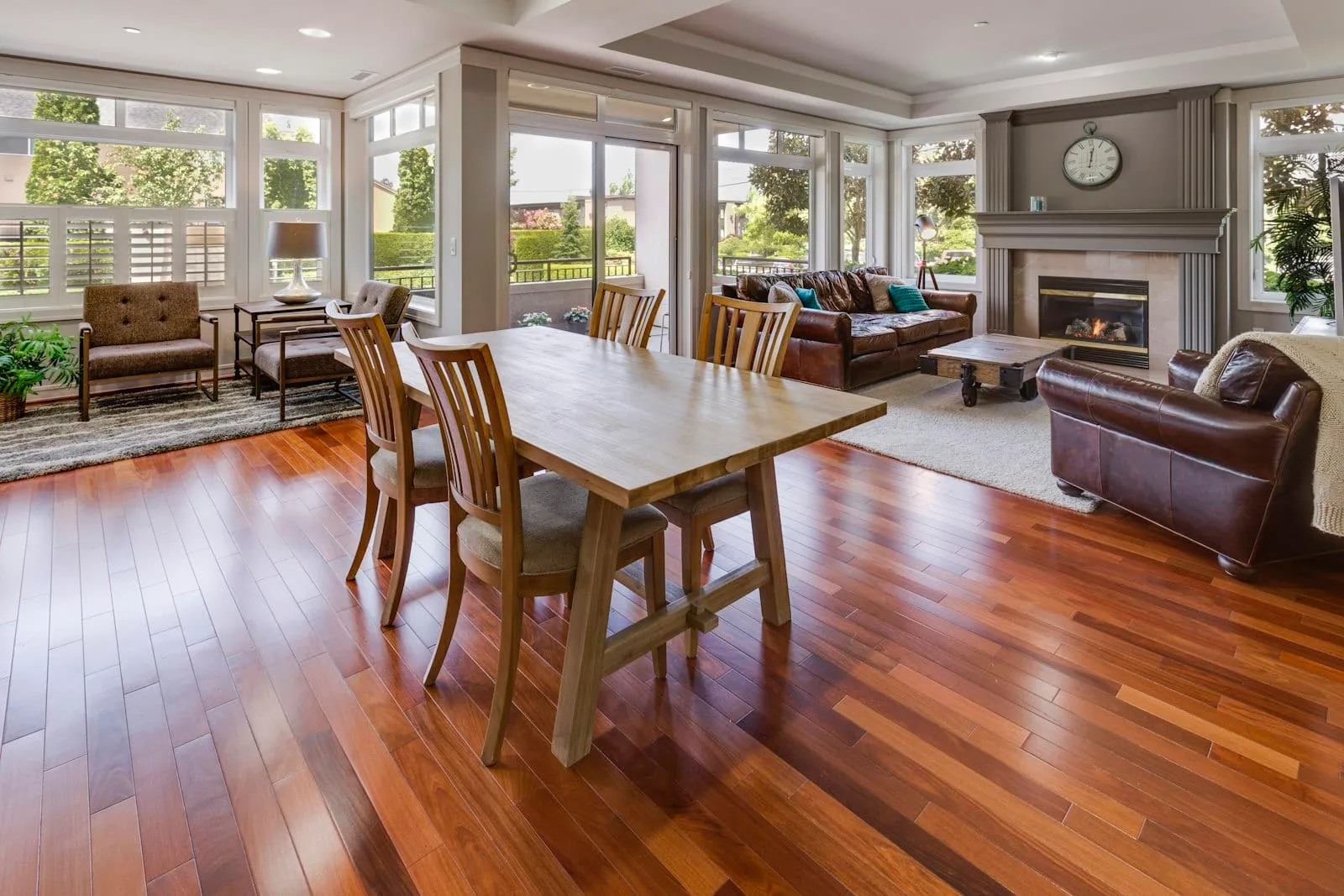
Engineered hardwood throughout a Toronto home
This is what an engineered hardwood installation involves across the main floor of an older Toronto home, replacing a mix of original hardwood past refinishing and later-added laminate.
We installed engineered hardwood in a wide-plank oak, laid in a straight running pattern, which holds up better than solid hardwood through Toronto's humidity swings between winter heating season and summer. New baseboards went in throughout, along with transition strips at the tile thresholds into the powder room and back entry, and we matched the flooring up the first three stair risers where the staircase meets the main floor.
The original subfloor in this house is tongue-and-groove pine over full-dimension joists, and it had close to half an inch of deflection near the bay window in the living room where a previous owner had cut into a joist for wiring at some point. Laying flooring straight over that would have left a soft spot that telegraphs through the new floor within a year or two. We sistered a new joist alongside the damaged one and screwed down an additional layer of plywood underlayment across that section before installation, which flattened the deflection out completely.
Engineered hardwood also has to acclimate in the house for around 72 hours before installation, and in humid weather that means running dehumidifiers to bring the space into the range the manufacturer specifies before a board is laid. Acclimation and any subfloor repair are what take a straightforward two to six day installation into a second week. Wide-plank oak with structural work underneath sits well above the $4 per sq ft starting point, which covers baseline material on a sound subfloor and nothing more.
No permit is required for a flooring replacement like this one. The stair-tread matching was the most time-consuming detail work on the job, since each tread had to be scribed individually to the existing stringer rather than cut to a single template.
We also pulled the old quarter-round trim out completely instead of reusing it, since decades of repainting had built up enough on the original pieces that they no longer sat flush against the new, thinner engineered boards. New baseboards went in, were caulked and painted, and were left to cure before the final coat of floor finish so no fresh paint touched the finished floor edge.