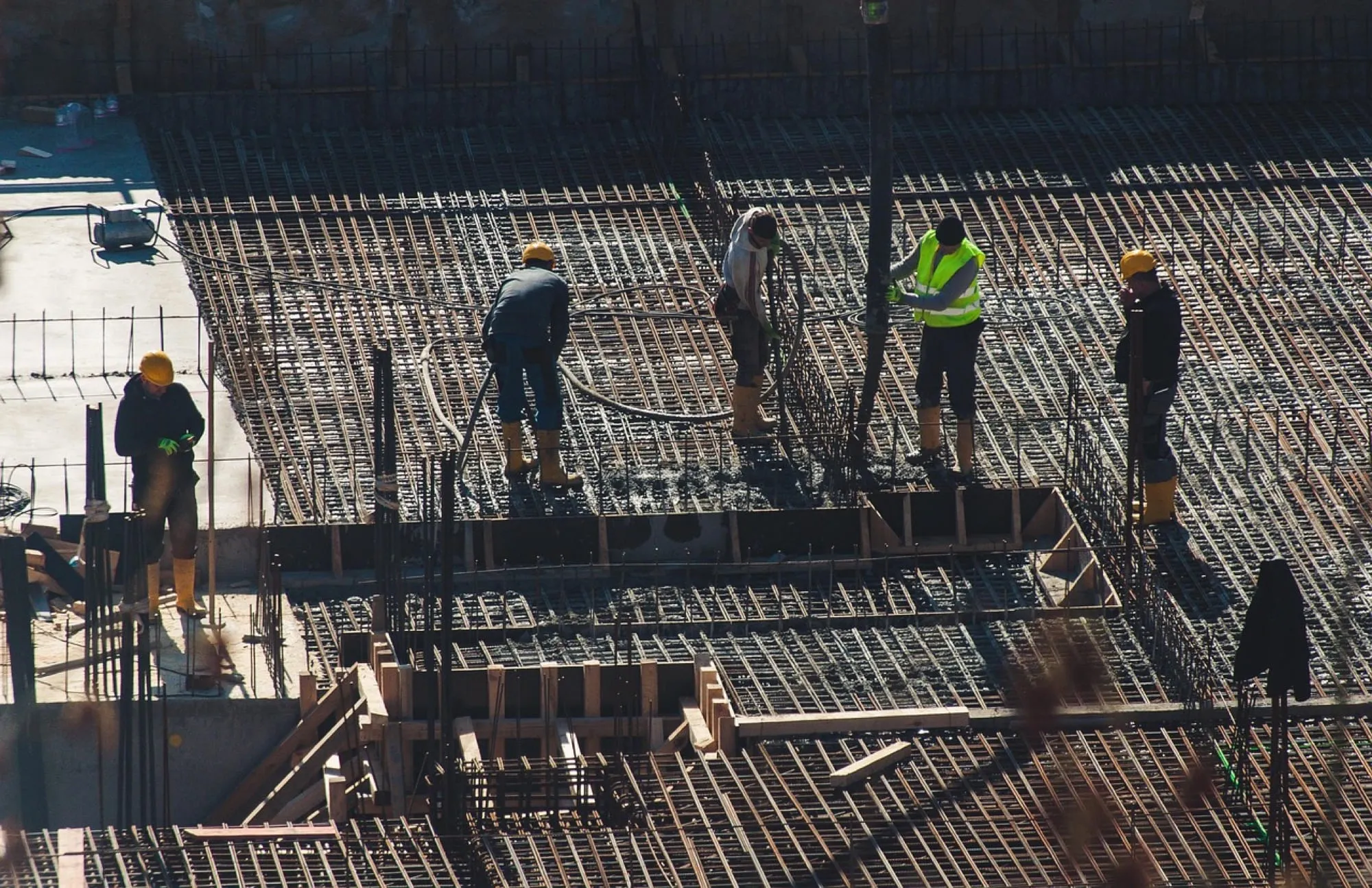
Ask a renovation company one question before you sign anything: who is actually going to be on site. Not who sold you the job, who shows up with tools. The answer splits into two models, and almost nobody explains the difference before you've already picked a contractor. One model is a company with its own trades, or the same long-term trade partners on every job, reporting to one project manager from the first measure to the final walkthrough. The other is a general contractor who sells the scope, then calls around to whichever electrician, plumber, and tile setter are free that week. Both can produce a finished kitchen. They do not get there the same way, and the difference shows up exactly where you'd expect it to: at the point where one trade's work ends and the next one's begins.
Key Takeaways
- A general contractor who subcontracts every trade is still legally the one homeowners can hold accountable, but that doesn't stop trades from blaming each other when something goes wrong at a handoff, and untangling whose mistake it was takes time you don't get back.
- Multi-prime coordination, where several separate contractors work one property without a single party responsible for the seams between their scopes, is a documented source of construction delay and disruption, not a homeowner's imagination.
- When trades aren't staffed in-house, the homeowner often ends up as the unofficial project manager: relaying schedule changes, re-explaining scope, and noticing gaps nobody else is watching for.
- Running trades in-house or through long-term partners means one project manager owns the schedule and the outcome for the whole job, not just their own piece of it.
- This isn't an argument that every subcontracted job goes badly. It's an argument that the staffing model changes who absorbs the cost when a handoff goes wrong, and it's worth knowing which model you're hiring before you need the answer.
Two ways a renovation actually gets staffed
Most homeowners assume "hiring a contractor" means hiring one company that does the work. In practice, it usually means hiring a company that manages the work, and the trades doing the actual framing, wiring, and tiling are a rotating cast of subcontractors booked project by project. There's a real reason this is the industry norm: a general contractor who subcontracts everything can scale up or down without carrying a large payroll, and a good one vets those subs carefully and stands behind their work. None of that is dishonest. It's a legitimate business model, and for a single-trade job, a new roof, a repaved driveway, it's often the only sensible one.
The other model staffs a job with trades that work together every week, either as employees or as partners who've been on the same schedule for years, answering to one project manager for the length of the job. That's the model we run here, and it's not a marketing position, it's the direct answer to a frustration Kanwar Bal ran into constantly during eight years working in the trade before starting this company: homeowners hiring two separate contractors for one project, with neither one accountable for what happened in the gap between them.
The difference between the two models is invisible on a sales call. Everyone says they'll manage the schedule and stand behind the work. It becomes very visible the first time a trade shows up a day late, or the first time two trades' work doesn't line up at the seam.
What actually happens at the handoff
Construction industry analysts have a name for a property run by several separate contracting parties instead of one: multi-prime coordination. It's well documented, and not in the homeowner's favour. Deficiencies in owner coordination between multi-prime contractors are a recognized cause of project disruption and delay, precisely because the interdependence between the parties working the same site is what makes or breaks the schedule (Long International, "The Duty to Coordinate and Cooperate on Multi-Prime Construction Projects"). A framer who's two days behind pushes the electrician's rough-in. An electrician who reschedules pushes the drywaller. On a job with one crew and one schedule, that's an internal problem solved with a phone call between people who work together daily. On a job stitched together from separate companies, each with its own book of other jobs to protect, it's a negotiation, and the homeowner is usually the one doing the negotiating.
The same gap shows up when something actually breaks. A general contractor who subcontracts every trade is still, in almost every case, the party contractually liable to the homeowner; a resource that walks consumers through exactly this distinguishes clearly between who does the work and who answers for it, and in a full-subcontracting model, that's still the general contractor, not whichever sub happened to touch the failing part (Consumer Contractor Authority, "Subcontractor Relationships: What Consumers Should Understand"). That's the theory, and it's correct. In practice, getting from "something's wrong" to "it's fixed" still runs through figuring out which trade caused it, and that conversation is exactly where finger-pointing shows up: a cracked section of drywall might be the framer's uneven stud spacing or the drywall crew's own installation, and when the two were never on the same crew to begin with, that argument happens on your time, not theirs. Warranty and defect disputes across the industry follow this same pattern often enough that it's a recognized category of construction complaint, not a one-off bad experience.
The homeowner becomes the project manager, by default
There's a quieter cost that doesn't show up in any dispute: who's actually coordinating the day-to-day. When a general contractor books a different subcontractor for framing, another for plumbing, and another for tile, someone still has to make sure each one shows up in the right order, with the previous trade's work actually ready for them. On a well-run job, that's the GC's problem to solve behind the scenes. On plenty of real jobs, it quietly becomes the homeowner's problem: fielding a text that the plumber's running a day late, then relaying that to the tile setter who was scheduled to start behind him, because nobody else closed that loop.
This is where the size and trade-count of a project matters more than people expect going in. A basement renovation in Guelph touching framing, electrical, plumbing, insulation, egress, and fire separation for a legal secondary suite has five or six trade handoffs before drywall even goes up, each one an opportunity for a schedule gap if the crews involved don't already work together. A kitchen renovation in Oakville has fewer trades but tighter sequencing, cabinets, countertop template, plumbing rough-in, and electrical all have to land in a specific order or you're paying for a countertop template redo because a plumber moved a drain line after the fact. Neither project is impossible to run well with subcontracted trades. Both are noticeably easier to run when the same project manager is watching the whole sequence instead of one slice of it.
How we built this differently, and why
The concrete crew and the renovation crew here work from the same design files and the same schedule logic, and every job, regardless of trade, reports to one project manager assigned at the start who's still the point of contact at the final walkthrough. That structure exists because of the specific problem it was built to solve: a homeowner shouldn't have to be the one who notices a gap between two contractors' scopes, or the one relaying a schedule change from one trade to another. Our about page covers the full story of why the business is staffed this way, but the short version is that trades here are in-house or long-term partners, not whoever happens to be available, and that's a deliberate choice about who answers for the job, not just who's cheapest to book for it.
That structure matters most exactly where trade coordination is hardest. A concrete patio in Hamilton built alongside a pergola and an outdoor kitchen needs the concrete crew's pour schedule, the drainage grading around the slab, and whoever's building the structure on top of it working off the same plan, not three separate quotes that each assume someone else is handling the transitions. Where concrete and renovation specifically overlap, foundations, egress wells, additions, we've written about why that intersection is its own case in why we run concrete and renovation under one crew; this piece is the broader version of that argument, about staffing any trade in-house rather than subbing it out project by project.
When subcontracting genuinely isn't the issue
It would be dishonest to write this as though every subcontracted job goes sideways, because most don't. A single-trade project, a new roof, a repaved driveway, a repainted exterior, has no handoff to manage in the first place, and a well-vetted subcontractor with a good track record can do that work exactly as well as an in-house crew. The risk in the subcontracted model scales with the number of trades that have to hand work to each other and the number of separate companies involved in doing it. A one-trade job with one contract has almost none of that exposure. A basement finish, a kitchen with a structural change, or anything touching both the inside and outside of a house has a lot of it, because that's where the seams actually are.
The honest question to ask a prospective contractor isn't "do you subcontract," it's "who is coordinating the handoffs, and what happens if two trades disagree about whose mistake caused a problem." A contractor who can answer that clearly, whoever they are, has already done the harder part of the job. Our guide to choosing a renovation contractor in Ontario walks through the fuller list of questions worth asking before you sign anything, and our list of red flags to watch for when hiring a renovation contractor covers the warning signs that show up when nobody's actually managing that coordination at all.
The question worth asking before you need the answer
None of this is really about crews versus subcontractors as an abstract preference. It's about where accountability sits on the day something doesn't go according to plan, because something eventually doesn't, on almost every renovation of any size. If the answer to "who's responsible for this" is a person you already know, your project manager, who's been on the job since the first measure, that's a very different conversation than if the answer is "let me find out which company handled that part." We built this business around being the first kind of answer, because Kanwar spent eight years watching what happens when homeowners are stuck with the second kind. Ask any contractor you're considering the same question before you sign, and pay close attention to how quickly, and how specifically, they can answer it.